Sugar comes to the East River
The Havemeyer family begins refining on this stretch of shoreline, making Williamsburg the industrial center of the Port of New York.
A rezoning, two decades, and a 19th-century street grid that mostly held its shape.
A refining waterfront that industrialized early, kept its brick grid inland, and was opened to housing by a single 2005 rezoning. Scroll the timeline.
The Havemeyer family begins refining on this stretch of shoreline, making Williamsburg the industrial center of the Port of New York.
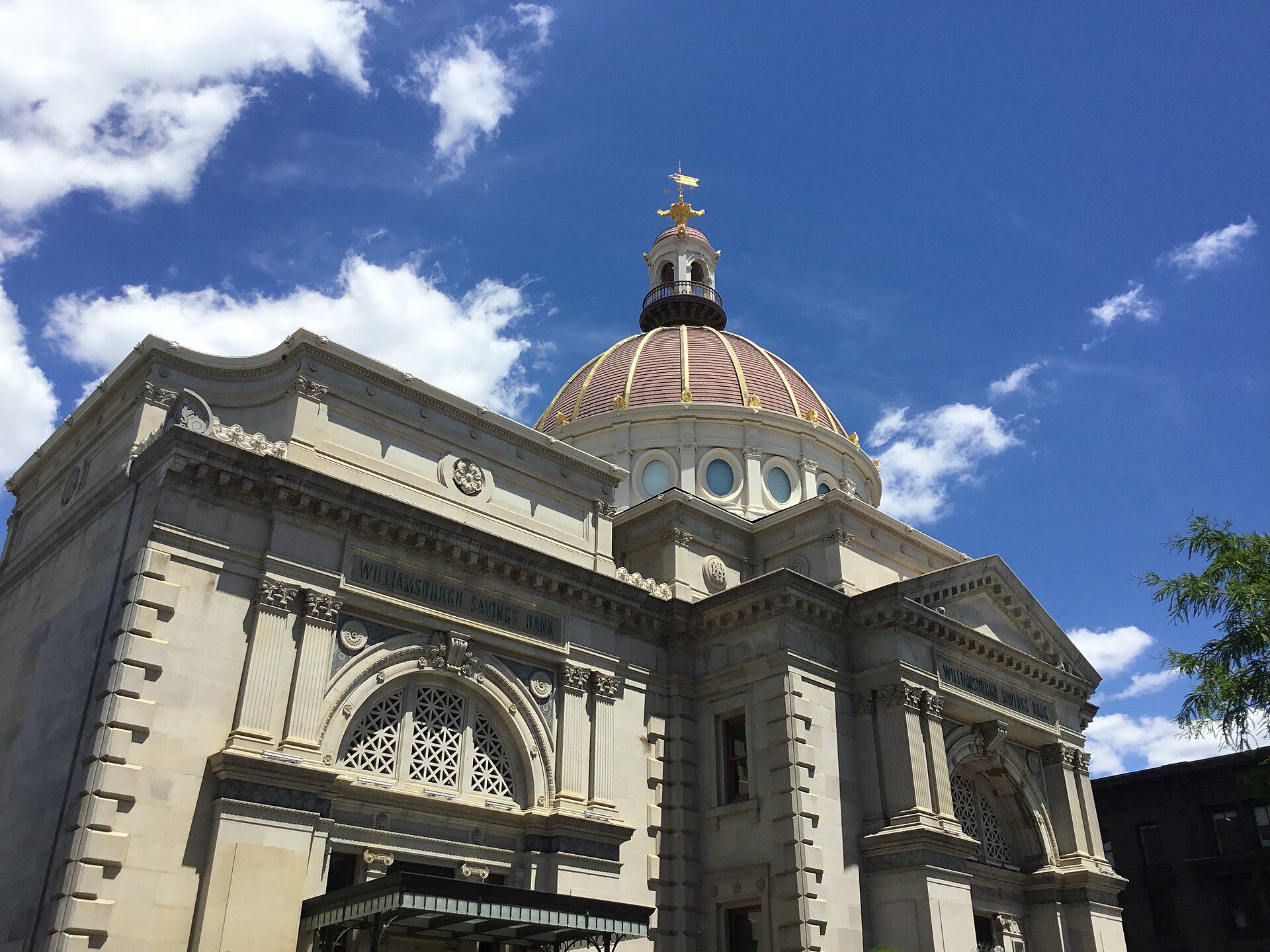
George B. Post’s Classical Revival banking hall opens on Broadway — coffered dome, gilded interior, and the largest stained-glass window in any bank in the city.
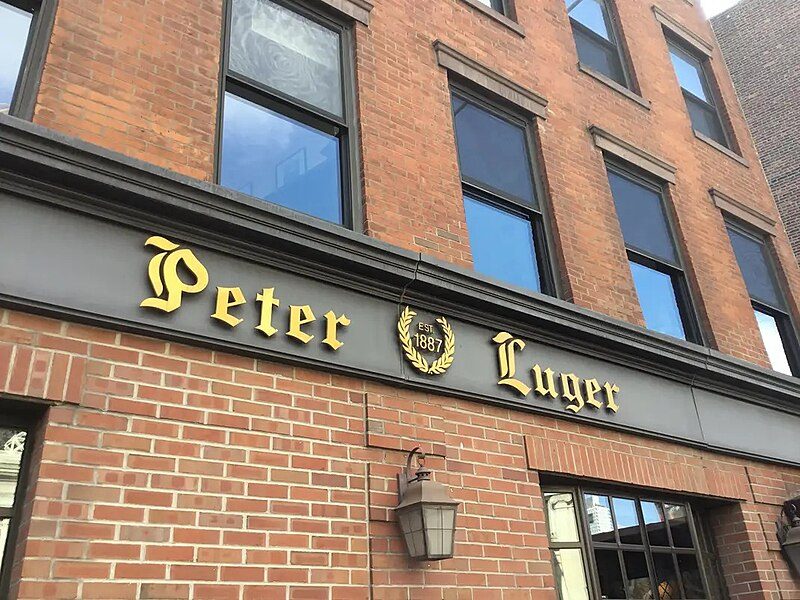
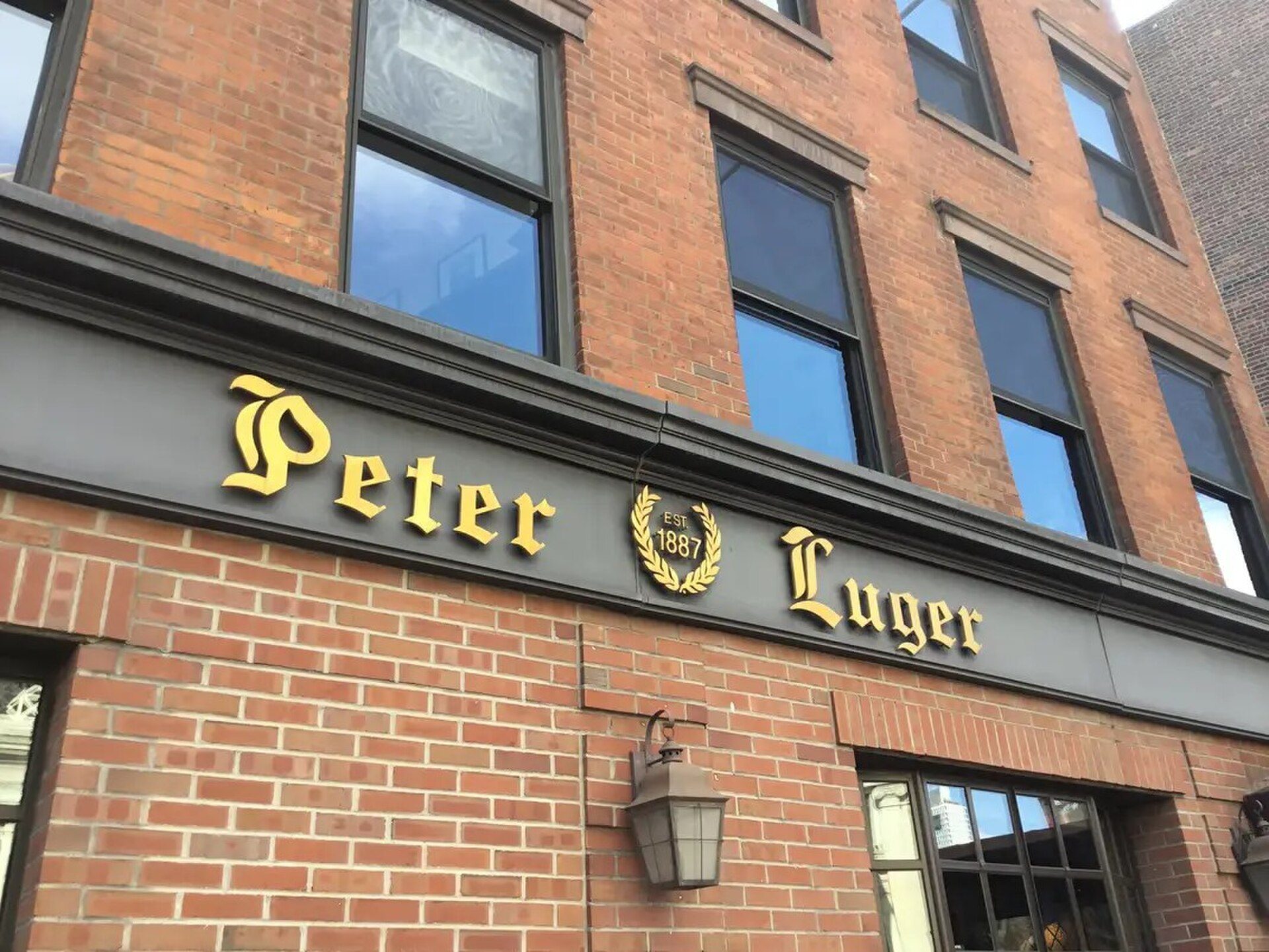
Porterhouse under the approach to a bridge that has not been built yet. It is still there.
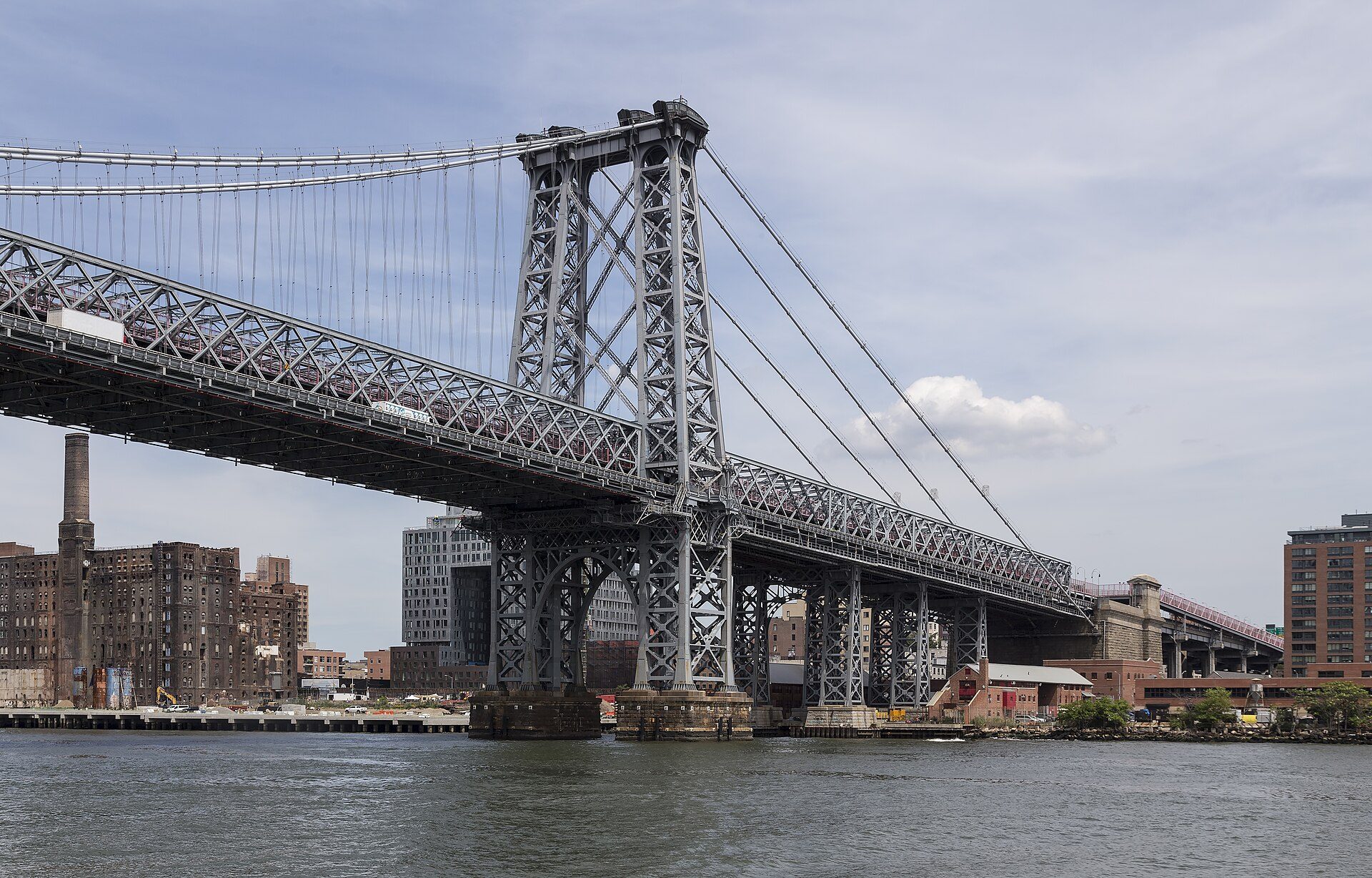
Leffert L. Buck’s span crosses on 31 December 1903 and puts the neighborhood twenty minutes from Delancey Street.
The Austin, Nichols & Co. warehouse rises at 184 Kent — the most architecturally significant building on the industrial shore, landmarked ninety years later.
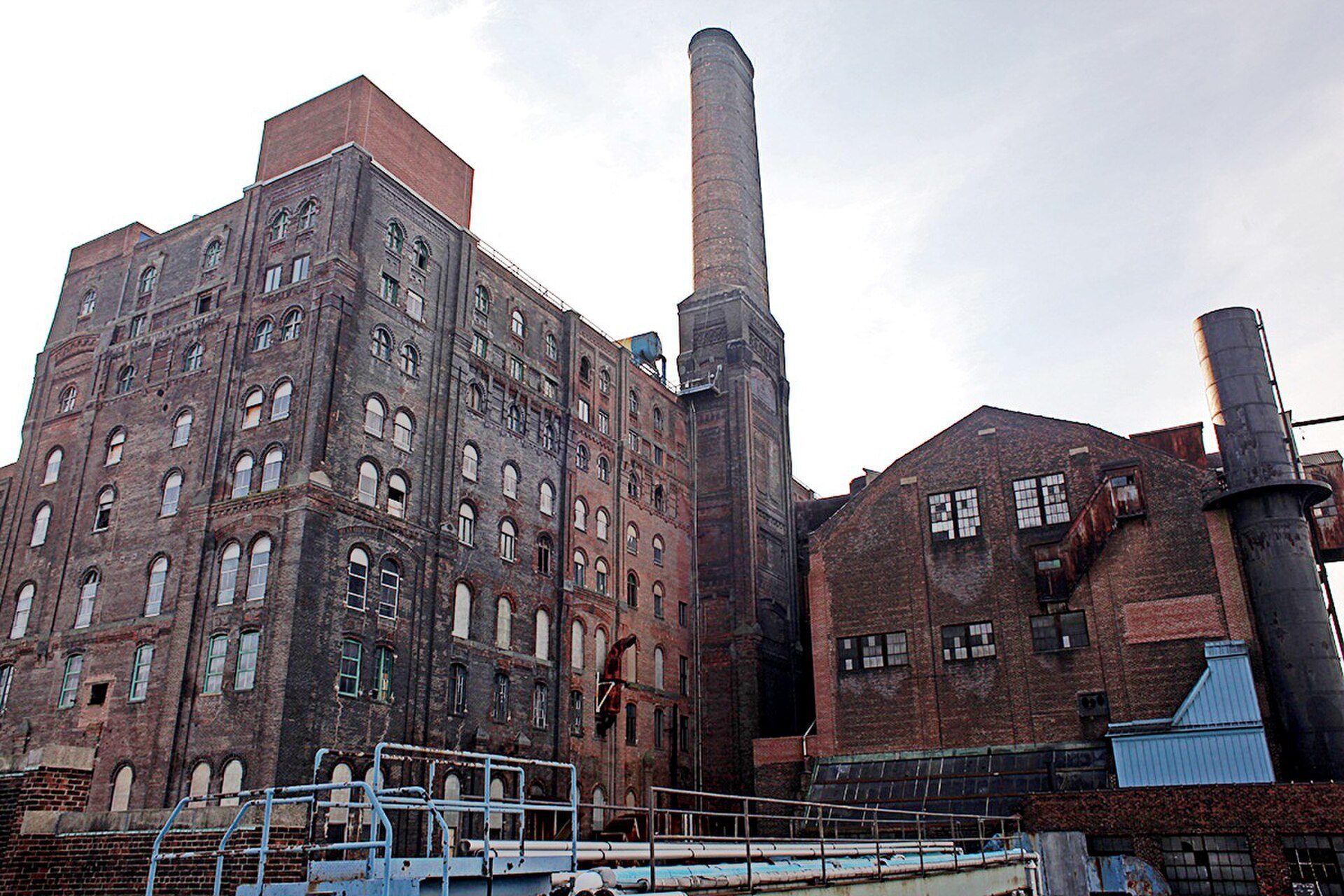
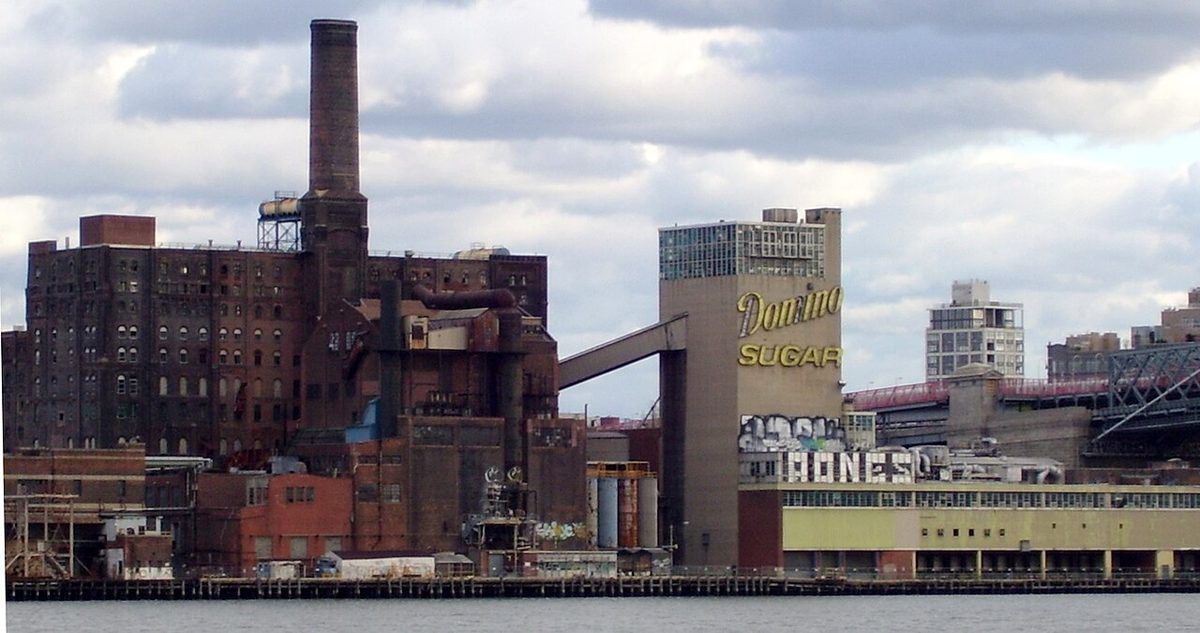
Domino stops refining after nearly a century and a half. The Filter, Pan and Finishing House is landmarked three years afterwards.
The Greenpoint–Williamsburg rezoning opens roughly 184 blocks to high-density mixed use — the single act the rest of this timeline follows from.
Six acres along the river by James Corner Field Operations, built over the refinery’s own sugar pipes.
460,000 sf of office inside the preserved 1881–84 masonry shell, beneath a barrel-vaulted glass penthouse.
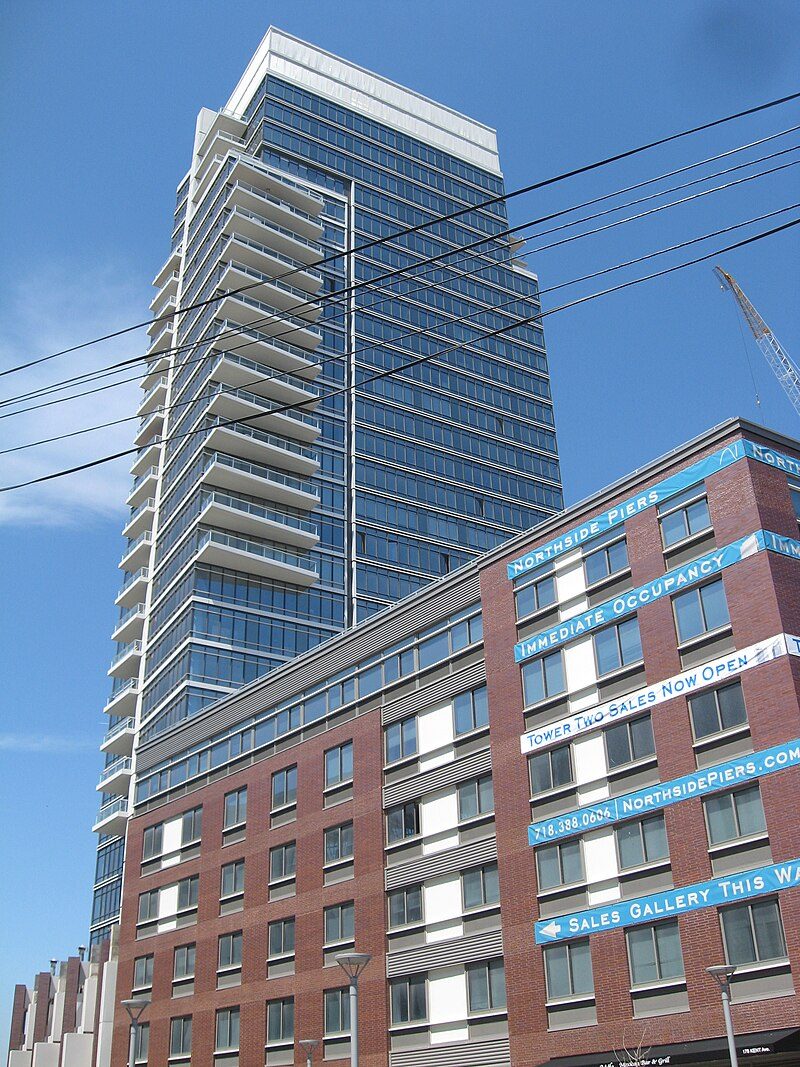
Selldorf’s twin towers of 55 and 39 stories open on Domino Park — the first residential delivery of the Two Trees master plan.
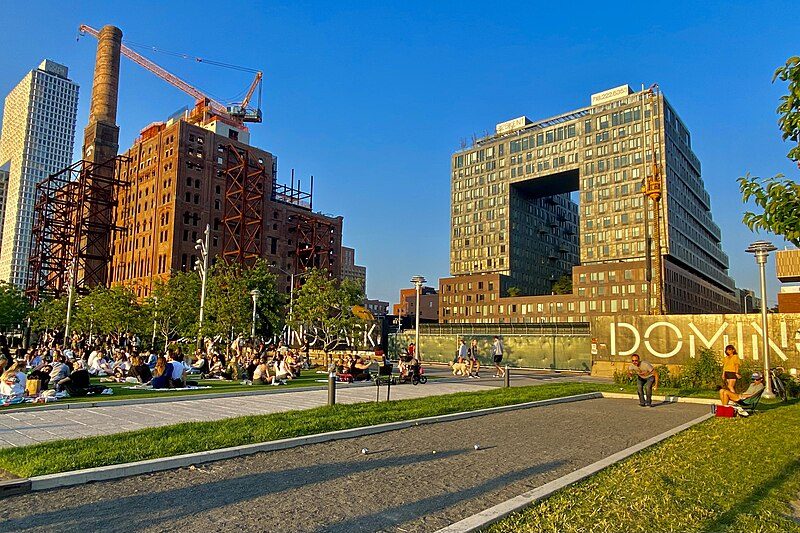
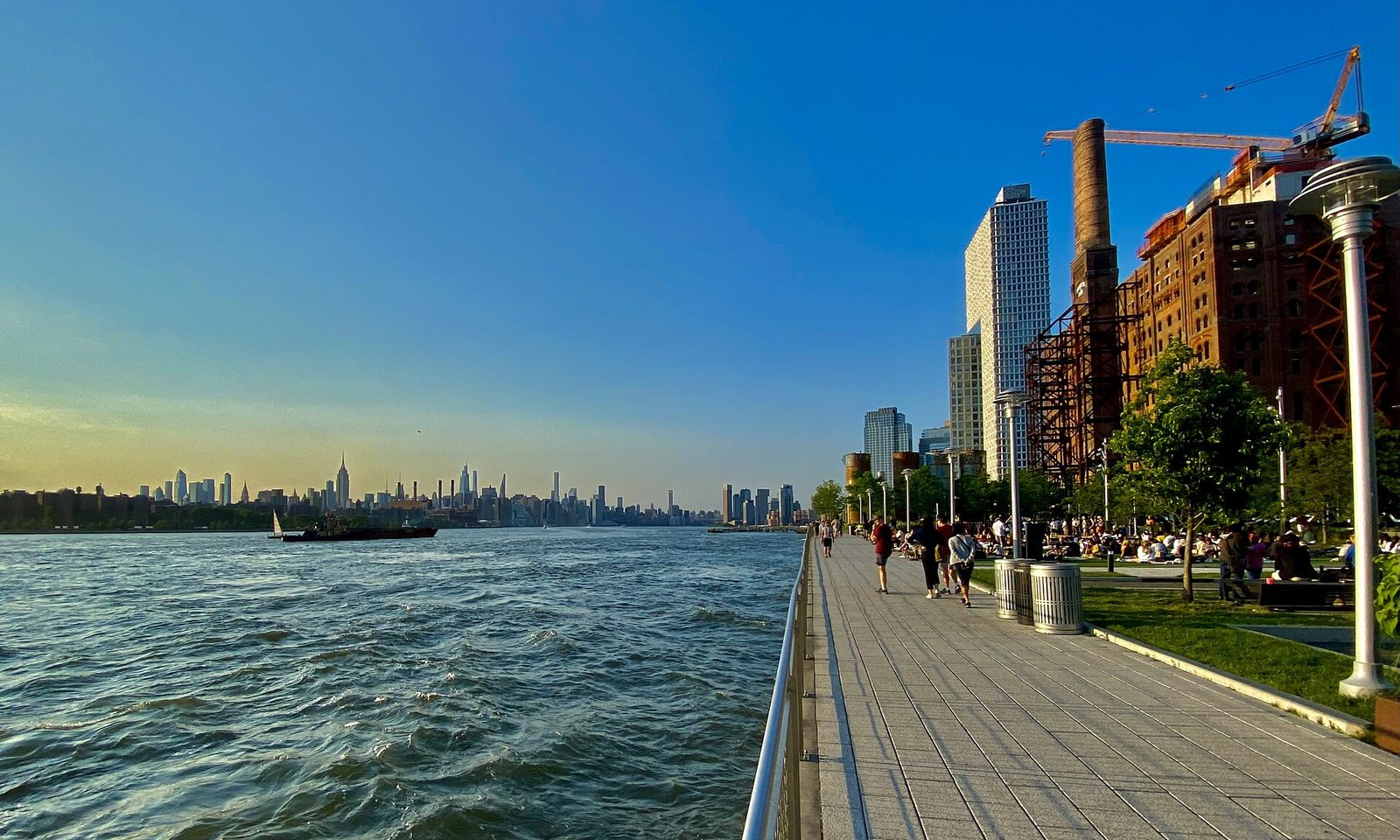
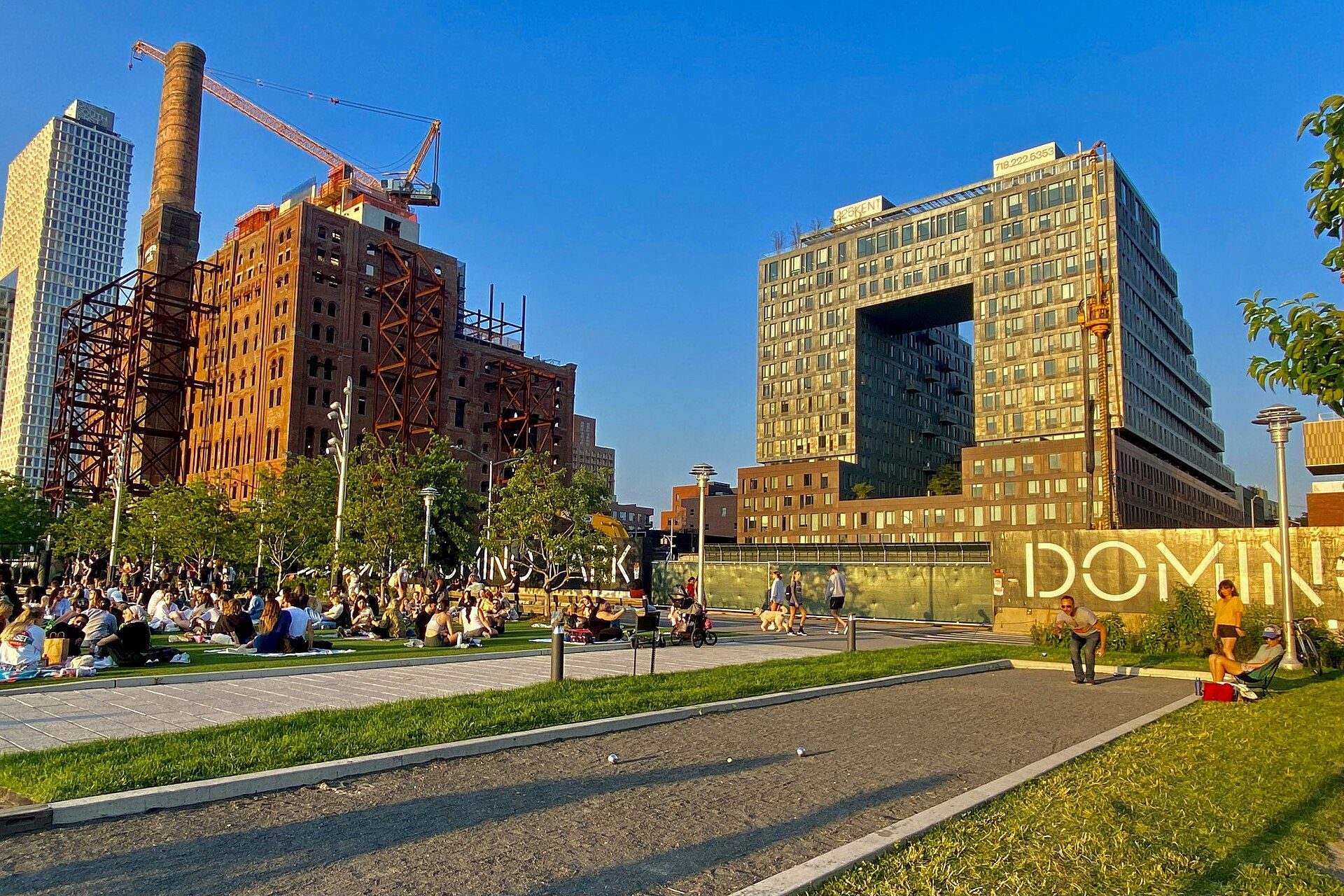
Domino Park threads through the Two Trees / SHoP master plan along the former Domino Sugar plant — six acres on the East River designed by James Corner Field Operations. The promenade is built on top of the original syrup pipes, with the salvaged cranes and conveyor pieces left as park furniture. Opened 2018, anchored by Tacocina, the bocce courts, and the elevated walkway over Kent Avenue.
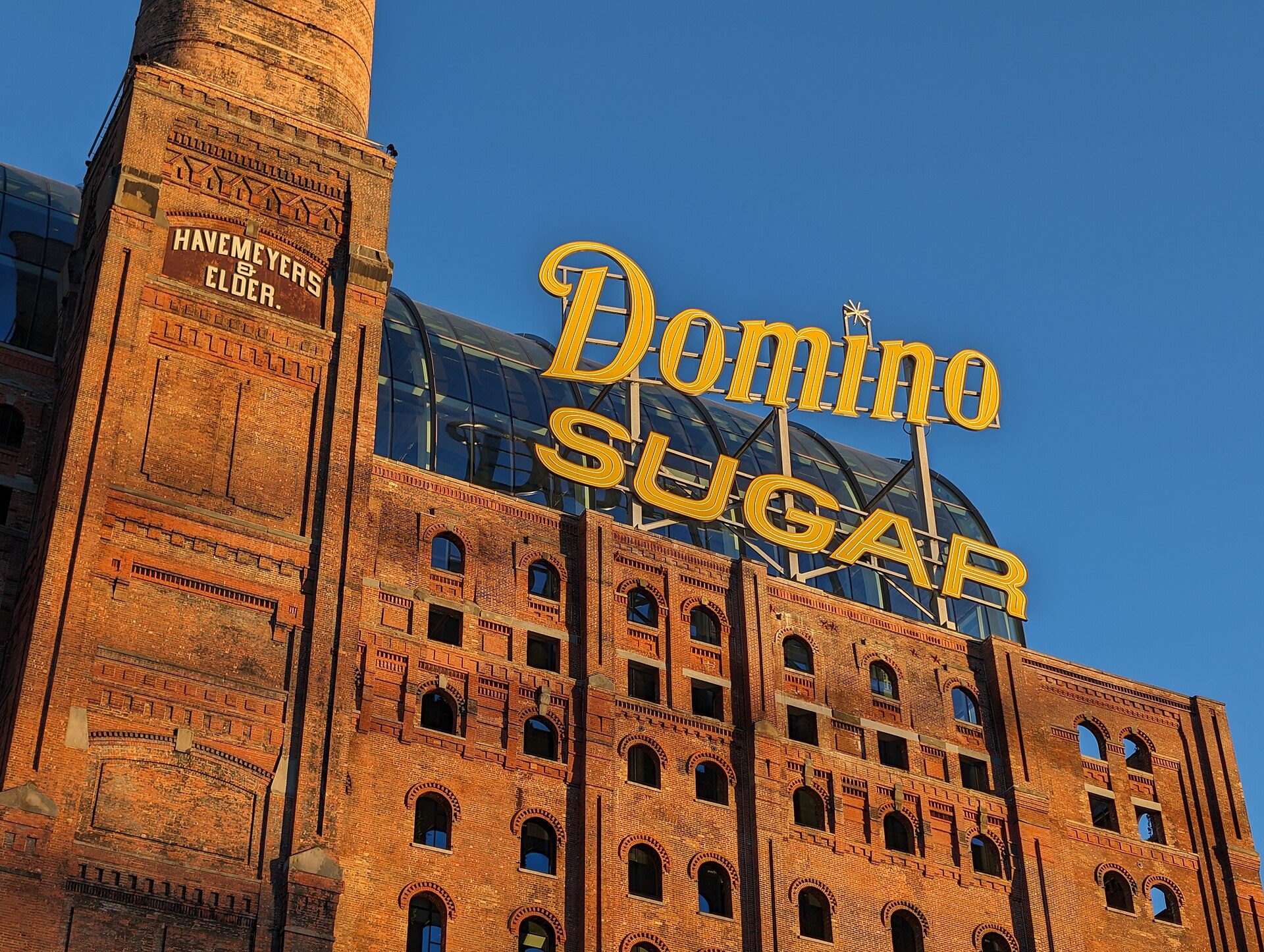
The historic Filter, Pan, and Finishing House of the Domino Sugar Refinery — designated a NYC Landmark in 2007 — reopened in September 2023 after a decade-long Two Trees / PAU restoration. Inside the preserved brick masonry shell sits a glass office building beneath a barrel-vaulted glass penthouse on the roof. 460,000 sf of office tenants, 27,000 sf of community-facing space. The most architecturally ambitious adaptive reuse on the Brooklyn waterfront.
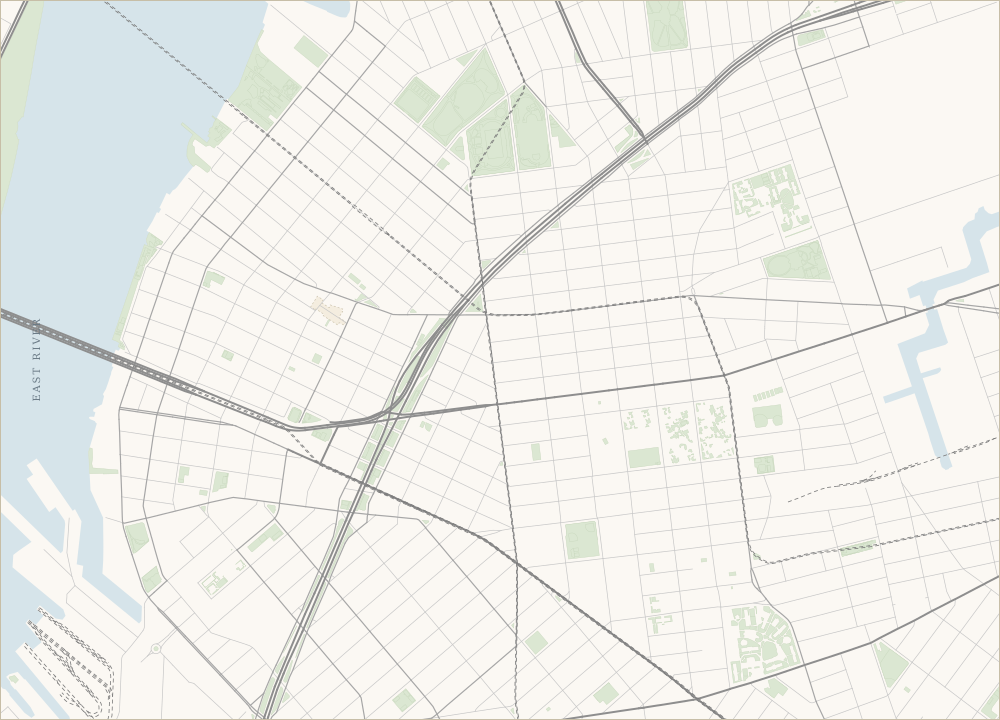
Every place in this guide, on one map. Filter by category, flip on Landmarks & history for what the rezoning built on top of, and look for the ★ — those are YCRE’s picks.
Trophy waterfront and full-floor condo product is holding firm. Mid-tier — 1BR and small 2BR inventory — has risen, and several developer-held units now carry closing-cost concessions or temporary rate buy-downs. Resale prewar inventory east of Bedford continues to trade efficiently when priced to recent comps. The rental market remains tight enough that 1BR Bedford-corridor inventory frequently clears at or above ask within two weeks. Current PPSF figures sourced from The YCRE Edit, refreshed quarterly.
The Filter, Pan, and Finishing House — landmarked in 2007, reopened in September 2023 after a decade-long Two Trees / PAU restoration. Glass office building inside the preserved brick shell, beneath a barrel-vaulted glass penthouse on the roof.
The first residential delivery of the four-tower Two Trees Domino master plan, designed by Selldorf Architects. Twin towers at the southern edge of the assemblage, fronting Domino Park; completed 2024.
The cooperage warehouse at 80 Wythe — converted in 2012 to a 70-room boutique hotel by Morris Adjmi. Reynard anchored the modern Williamsburg dining era; Le Crocodile holds the lobby today. The rooftop Bar Blondeau holds the most-photographed sightline back at Manhattan.
Williamsburg's first ground-up commercial office development in over fifty years. Two volumes, one in brick, one in steel-and-glass, joined by a central courtyard. Cross-laminated timber accents inside.
George B. Post's Classical Revival banking hall at 175 Broadway — domed, gilded, with a coffered ceiling and the city's largest stained-glass window inside a financial building. Operates today as Weylin, an event venue. The South Williamsburg counterweight to the waterfront towers.
22-story hotel with a 60,000 sf elevated public park threaded through the lower floors. Westlight, the 22nd-floor rooftop bar, faces the Empire State Building head-on. Misi sits at the ground floor.
Inland from the water the original grid is still there — low-rise brick, prewar tenements, warehouses turned to lofts. It is the part of Williamsburg the rezoning never reached.