YC REAL ESTATE · NEIGHBORHOOD LIBRARY

Tribeca

Cast-iron warehouses, a film festival, and the most expensive ZIP code in New York.

MANHATTAN · CD 1 · NTA MN0201 · JUNE 2026
$3.7M Median sale · ZIP 10013 · 2025
$2,156 PPSF · neighborhood median
4 Historic districts
1976 “TriBeCa” first in print · NYT
1 · A·C·E Six lines · four stations
The story

Cast iron, a film festival, and the most expensive ZIP in New York

01 · The triangle below Canal

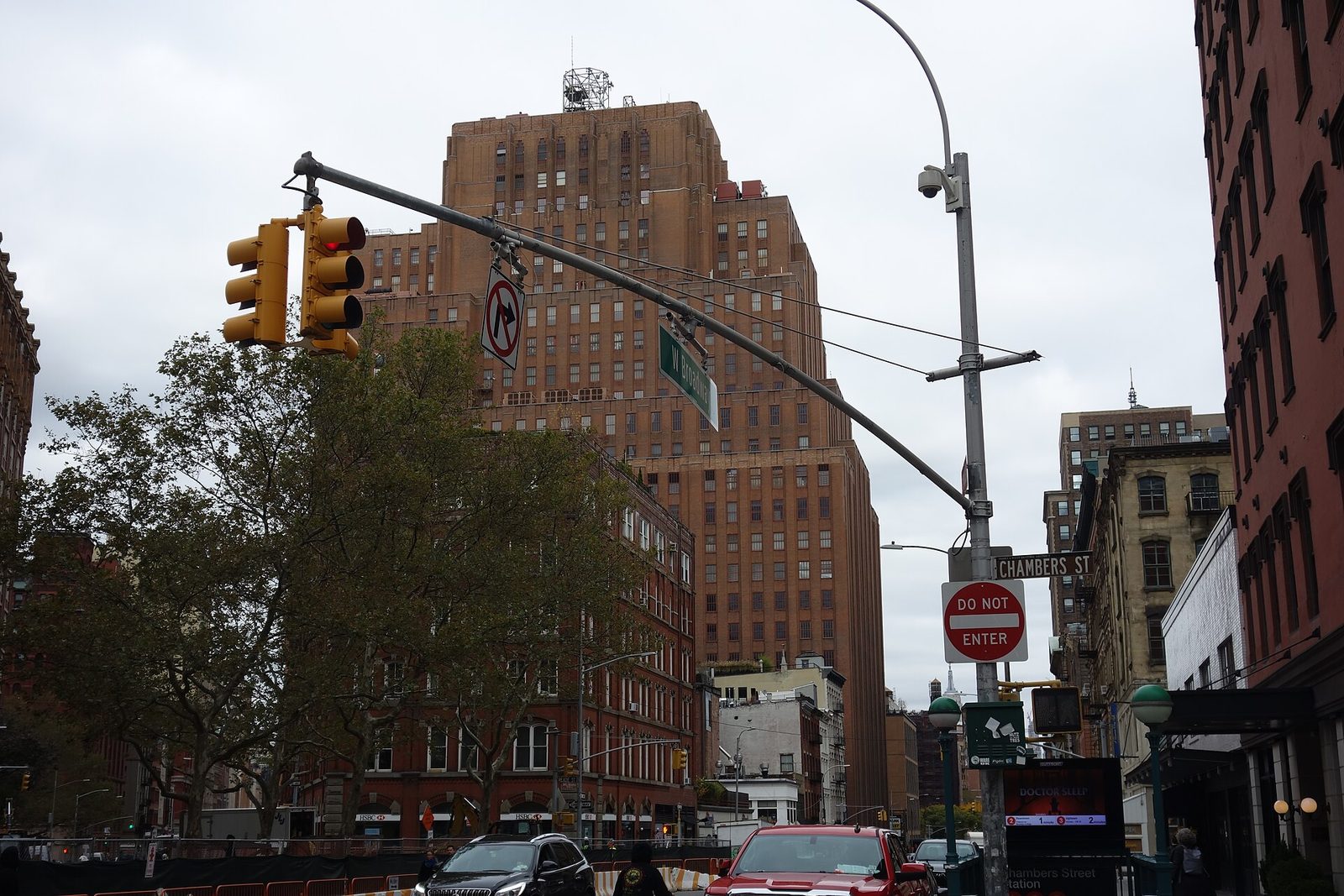
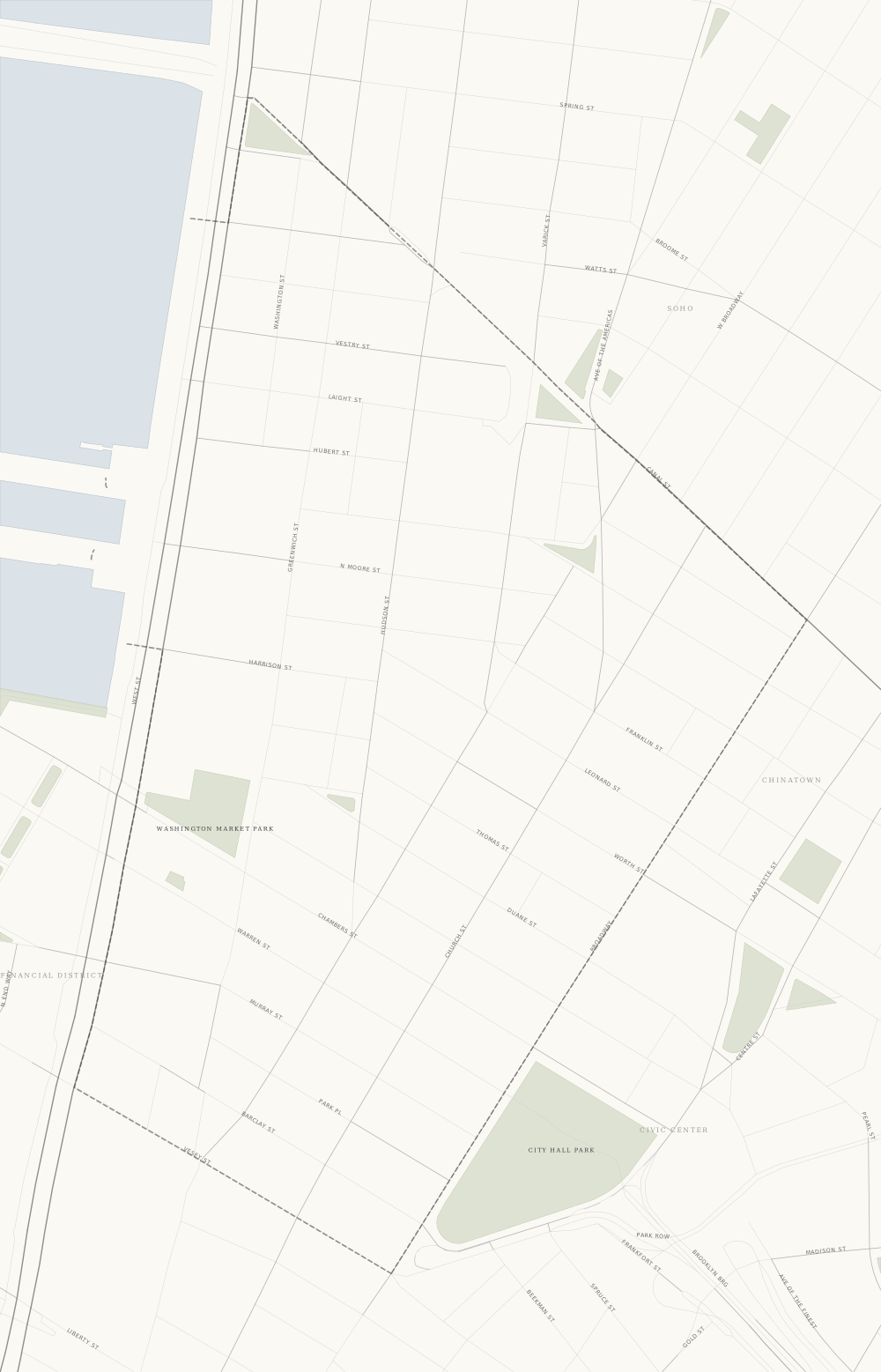
Tribeca is a syllabic acronym for the Triangle Below Canal, coined by a city planner in the early 1970s and printed in The New York Times in April 1976, once the City Planning Commission adopted the name. The edges are Canal Street to the north, West Street to the west, Broadway to the east, and — depending on whom you ask — Vesey, Murray, or Chambers to the south. The eastern wedge between Broadway and Church is the original triangle; everything west was added by listings over fifty years.

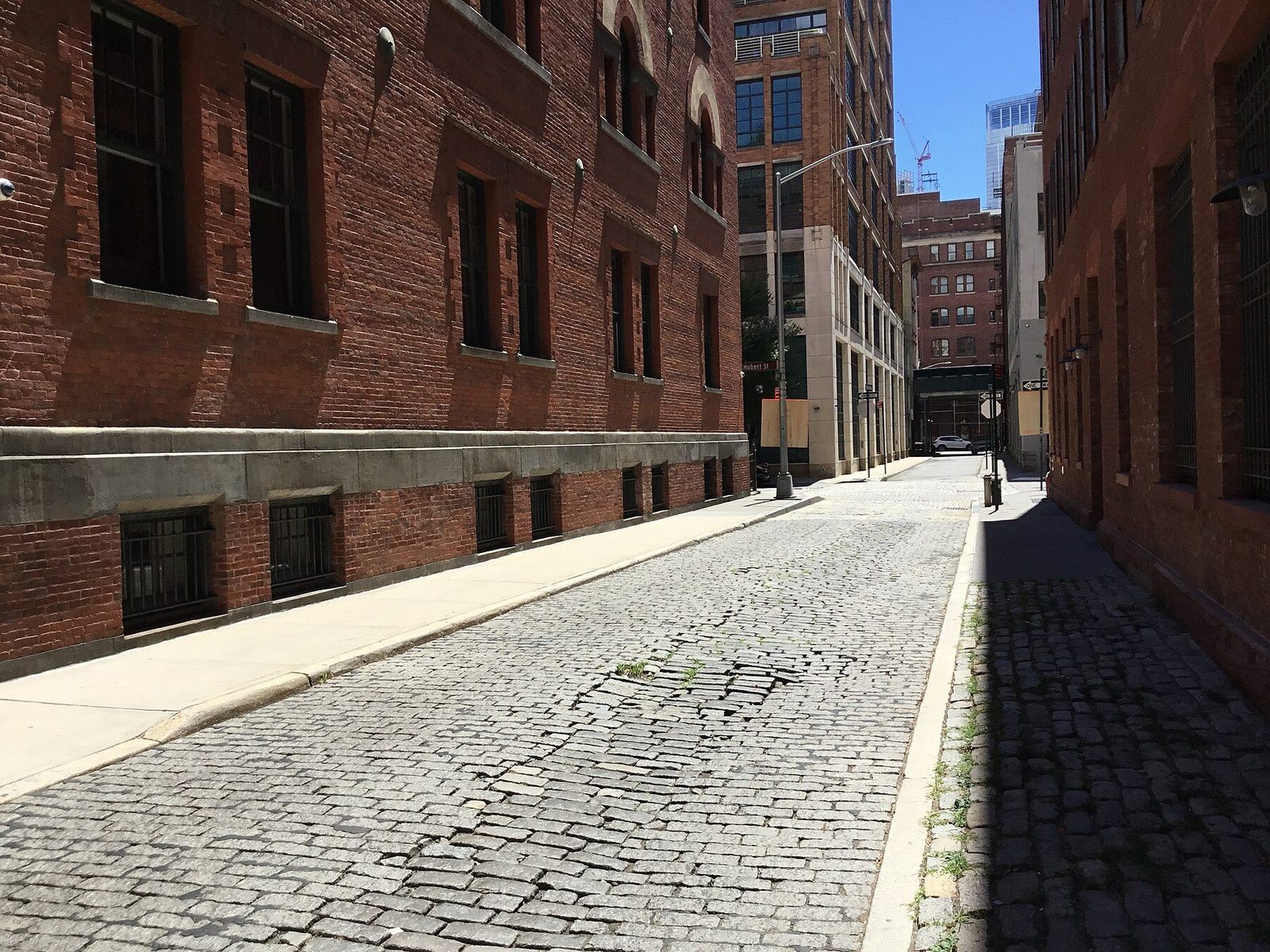
Four historic districts — Tribeca West (1991), East and North (1992), and South (1992, extended 2002) — cover most of the neighborhood west of Broadway, protecting a denser concentration of mid-19th-century commercial architecture than anywhere in the country outside SoHo. Six subway lines stop at four stations, all within five blocks of any address in the districts.

02 · Cast iron, butter and eggs

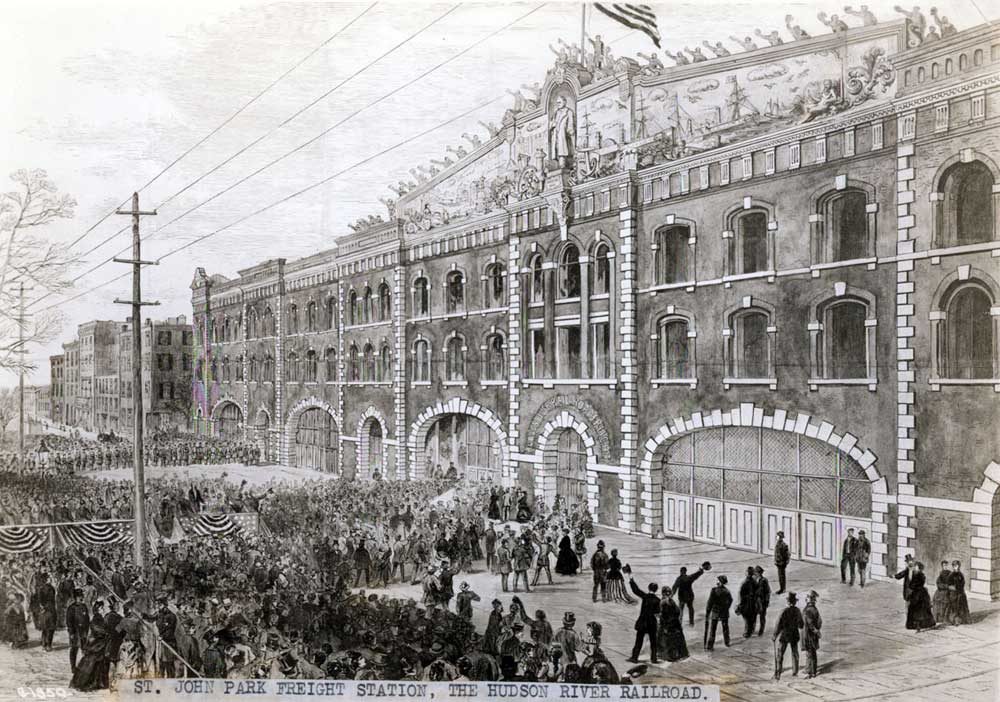
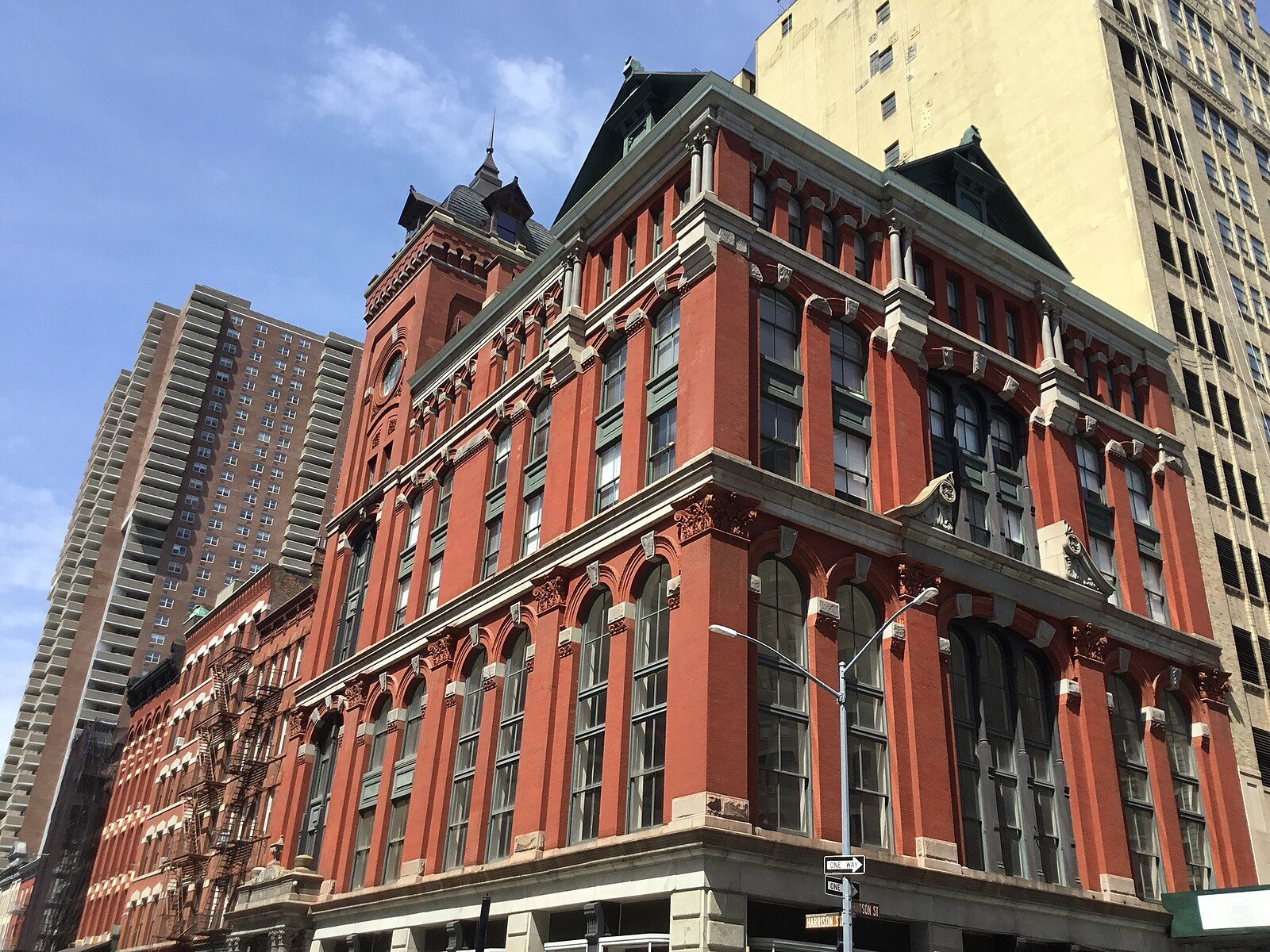
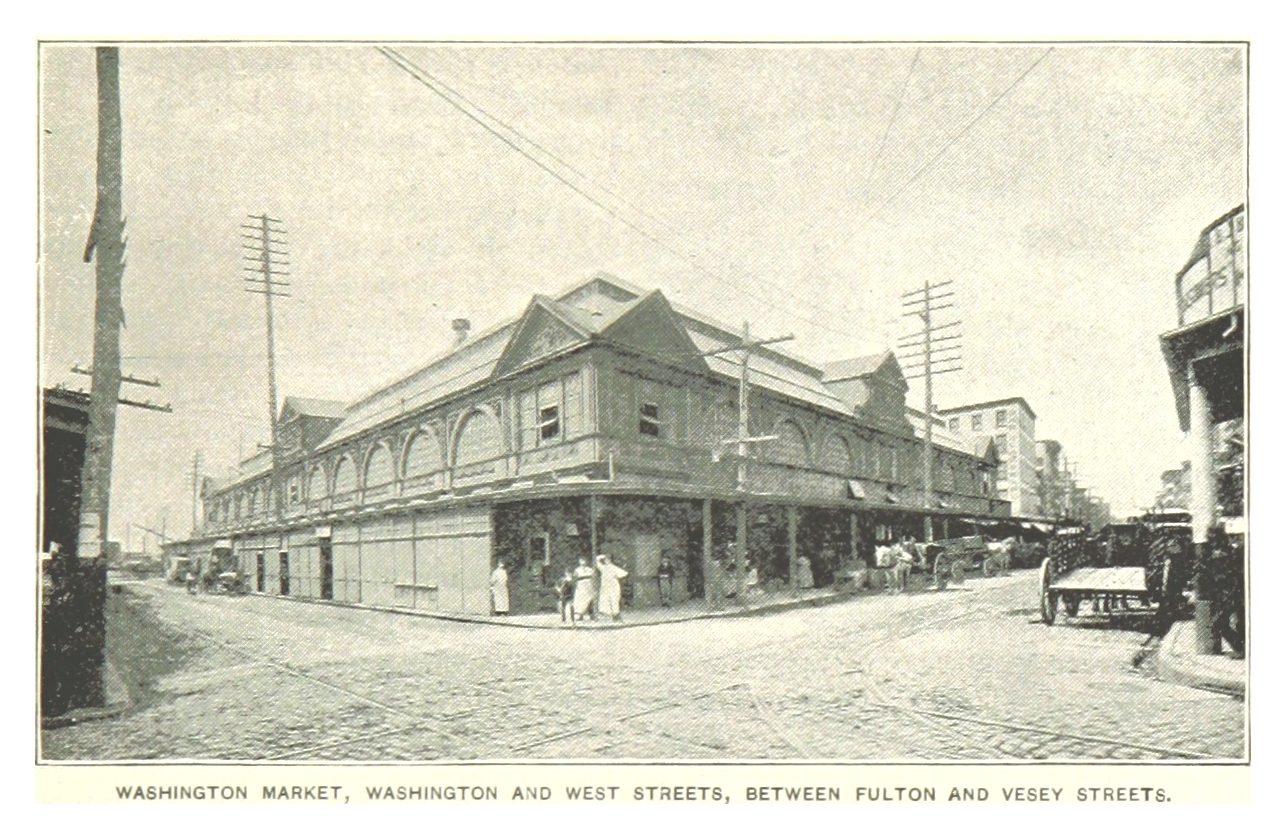
Before the lofts, Tribeca was a wholesale district. Washington Market, built in 1812 at the southwest corner, grew into the largest produce market in the country; the city razed the eleven-by-three-block district in 1962, and Independence Plaza rose on the cleared land in 1975. The Mercantile Exchange at 6 Harrison Street — 1884, with a corner clock tower — once moved 7.5 million cases of eggs and 3.5 million tubs of butter a year. The thirteen granite “eggs” set into Bogardus Plaza cite the trade.

The cast-iron stock here is among the largest in the United States, second only to SoHo. In 1971 a zoning amendment legalized residential lofts for certified artists; the 1982 Loft Law extended the protection citywide. The empty warehouses absorbed the overflow from SoHo, and the artists who moved in were the first wave of what the neighborhood became.

03 · De Niro’s Tribeca

In 1989 Robert De Niro and Jane Rosenthal turned a coffee warehouse at 375 Greenwich into the Tribeca Film Center. A year later, De Niro and Drew Nieporent opened Tribeca Grill downstairs, capitalized by twenty-three investors; it ran for thirty-five years before closing on March 1, 2025. The pair opened Nobu at 105 Hudson in 1994. After September 11, De Niro, Rosenthal, and Craig Hatkoff built the Tribeca Festival in 120 days to bring audiences back below Canal; it has run every June since 2002.

In 2008 De Niro opened the Greenwich Hotel at 377 Greenwich — eighty-eight rooms, a brick courtyard, a cellar spa rebuilt inside a 250-year-old Kyoto farmhouse. Locanda Verde followed on the ground floor in 2009 under Andrew Carmellini, and the bar has been full at noon ever since.

04 · The luxury rebuild

The contemporary wave is vertical and discreet. Herzog & de Meuron’s 56 Leonard — the 821-foot “Jenga,” completed 2017, with an Anish Kapoor sculpture at its base — and Robert A.M. Stern’s 30 Park Place, downtown’s tallest residential tower over a Four Seasons, define the skyline. On the river edge, Stern’s 70 Vestry took the last undeveloped Hudson parcel, and the loft conversion at 443 Greenwich became, by quiet consensus, the most paparazzi-proof building in the country.

Supply is the structural story. The four historic districts foreclose most demolition, so new product comes from loft conversions and the few river-edge parcels that remain. ZIP 10013 posted the highest median sale price in New York City in 2025; the neighborhood median runs around $4.5 million at roughly $2,156 a foot. Current figures in The YCRE Edit, refreshed quarterly.

The waterfront

Two piers on the Hudson

05 · Pier 25 · Hudson River Park · reopened 2010

The longest pier in the park

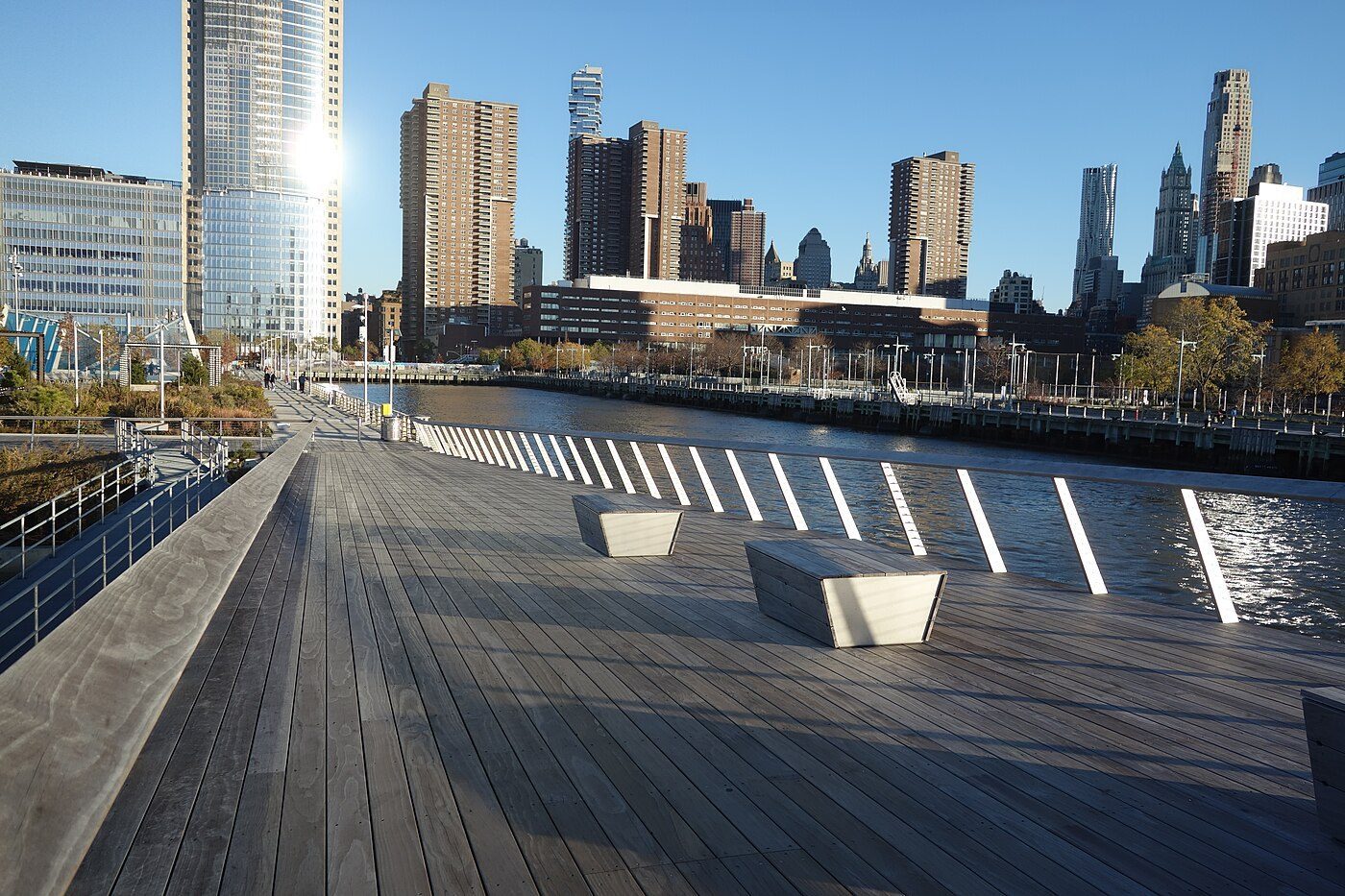
At 985 feet, Pier 25 off North Moore Street is the longest pier in Hudson River Park — Manhattan’s only eighteen-hole mini-golf course, two sand-volleyball courts, a skate park, a turf field, and a long playground with water features. Rebuilt for $100 million and reopened in November 2010. Sunset from the end of the pier is the neighborhood’s best public view.

06 · Pier 26 · Hudson River Park · opened 2020

Five ecological zones over the water

Pier 26 opened in September 2020 — two and a half acres organized around five native ecological zones, from woodland to coastal grassland to the Hudson estuary, with a science playground at the head of the pier. The Estuarium education building is planned for the upland beside it.

Where it lives

Cast iron, towers, and culture

1 2 3 4 5 6 7 8 9 10 11 12 13 14 15
01Mercantile Exchange Building
02Cary Building
038 Thomas Street
04Powell Building
05Independence Plaza North
0656 Leonard Street
0730 Park Place
0870 Vestry Street
09443 Greenwich Street
10155 Franklin Street
11The Sterling Mason
12Tribeca Film Center
13The Roxy Cinema & The Django
14Apexart
15BMCC Tribeca PAC
Where you live

The dining spine, the bar block, the river parks

1 2 3 4 5 6 7 8 9 10 11 12 13 14 15 16 17 18 19 20 21 22 23 24 25 26 27 28
01Frenchette
02The Odeon
03Locanda Verde
04Atera
05Bubby's
06Square Diner
07Tiny's & The Bar Upstairs
08Forgione
09Tamarind Tribeca
10Laughing Man
11Maman
12Frenchette Bakery
13Kaffe Landskap
14Walker's
15Smith & Mills
16Brandy Library
17Puffy's Tavern
18Whole Foods Tribeca
19Tribeca Greenmarket
20Shinola
21Pier 25
22Pier 26
23Washington Market Park
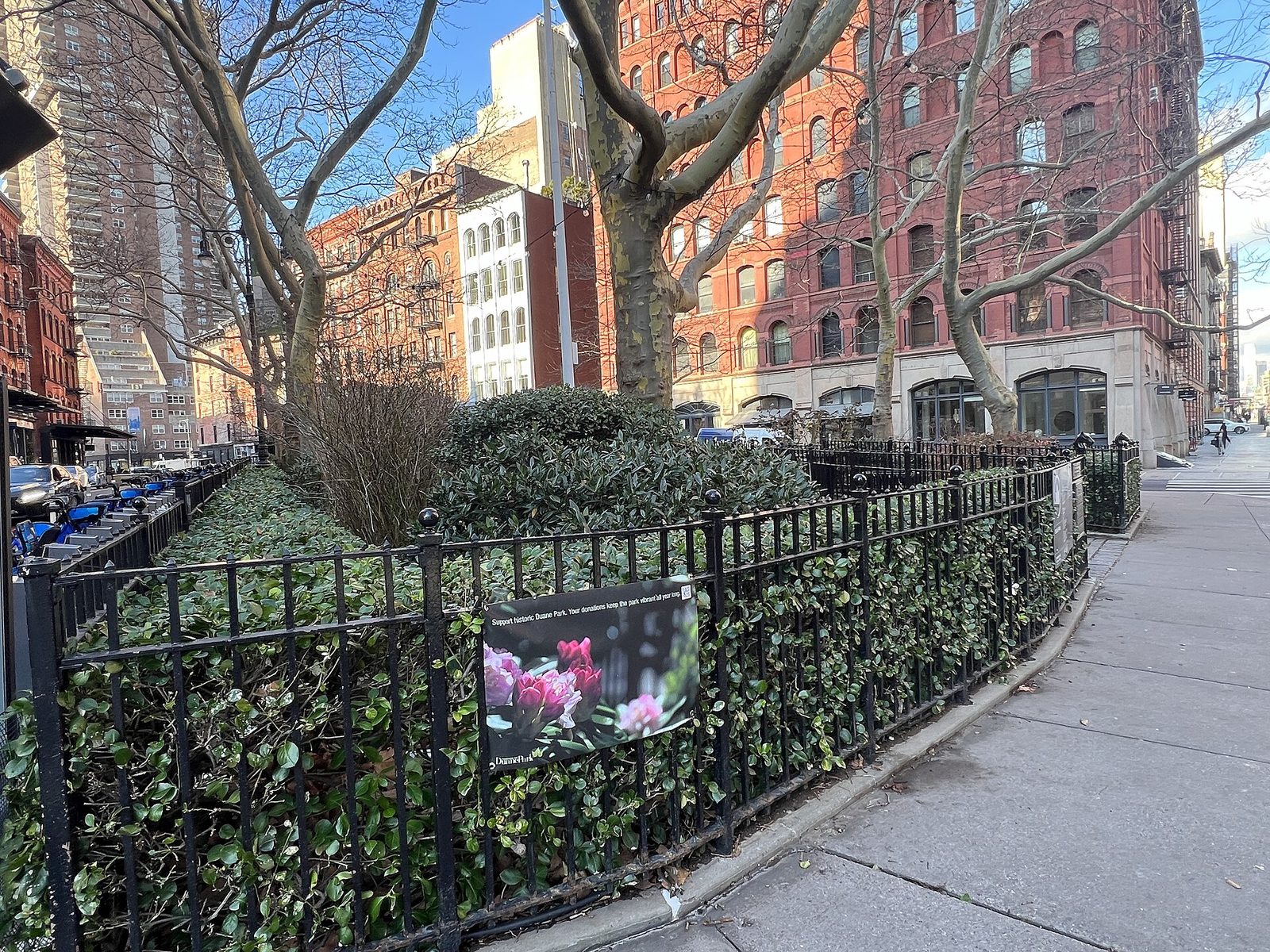
24Bogardus Plaza
25Albert Capsouto Park
26The Greenwich Hotel
27The Roxy Hotel
28The Frederick Hotel
Notable buildings

Six addresses that explain Tribeca

Mercantile Exchange Building

6 Harrison Street · 1884

Thomas R. Jackson’s red-brick-and-granite exchange, completed 1884 — the original New York Mercantile Exchange, with a corner clock tower. By 1939 the floor traded 7.5 million cases of eggs and 3.5 million tubs of butter a year. The exchange left for the World Trade Center in 1977; the building is condominiums now.

The Powell Building

105 Hudson Street · 1892

Carrère & Hastings — the firm that built the New York Public Library — designed this for the Boston chocolate-maker Walter Baker & Co. The original Nobu took the ground floor in 1994 and held it until it closed at the end of 2016.

56 Leonard Street

Herzog & de Meuron · 2017

Sixty stories of stacked, cantilevered glass volumes — 821 feet, 145 condominiums, the “Jenga” tower since it broke ground. A 40-ton polished-steel Anish Kapoor sculpture, commissioned in 2008, was unveiled at the base in early 2023.

30 Park Place

Robert A.M. Stern · 2016

Eighty-two stories — the Four Seasons Hotel below, 157 residences above — downtown’s tallest residential tower, in Stern’s limestone-and-setback idiom.

443 Greenwich Street

loft conversion · 2016

An 1880s bookbindery warehouse converted to 53 lofts — a sub-basement garage, an interior courtyard, and no street-facing lobby windows have made it, by quiet consensus, the most paparazzi-proof building in the country.

The Sterling Mason

71 Laight Street · 2016

Morris Adjmi restored a 1905 brick coffee-and-tea warehouse and paired it with a mirror-image metallic new-build twin — 33 residences, interiors by Gachot.

The quiet things
The bars are old. Walker’s has poured at 16 North Moore since the 1890s; Puffy’s has kept its 1940s room on Hudson Street; Smith & Mills hides in a former carriage house with no sign. The neighborhood’s losses are real — the Bell Bates health-food store closed in 2013 after 128 years, the Arcade Bakery left its 1929 Art Deco lobby in 2019 — and the survivors get more attention for it. The hyperlocal record is kept by Tribeca Citizen, which has missed no opening or closing in the historic districts in fifteen years.
What it costs

Supply at the top of the market

$3.7M Median sale · ZIP 10013 · 2025
~$2,156 PPSF · neighborhood median
$47M 56 Leonard penthouse · 2013
4 Historic districts cap supply

The reason Tribeca’s medians stay at the top of New York is supply. The four historic districts foreclose most demolition; new inventory comes from loft conversions — 443 Greenwich, the Sterling Mason, the Clock Tower — and the few river-edge parcels, of which 70 Vestry was the last. The market for the result is famously discreet: sub-basement garages and interior courtyards, because the demand is for sub-basement garages and interior courtyards. ZIP 10013 posted the city’s highest median sale price in 2025; the neighborhood median runs near $4.5 million. Current PPSF figures sourced from The YCRE Edit, refreshed quarterly.

What’s said about it

In print

“The four historic districts make Tribeca the rarest thing in Manhattan: a luxury neighborhood that physically cannot build much more of itself.”

THE REAL DEALMARKET COVERAGE

“Tribeca turned a district of cast-iron warehouses into the most expensive ZIP code in the country without ever raising its voice.”

YCRE Picks

Where to go right now

Reference 18 fields
BoundariesCanal St N · West St W · Broadway E · Vesey/Murray S (the original triangle runs east only to Church). NTA Tribeca–Civic Center (MN0201), Manhattan CD 1. ZIPs 10013 (north) & 10007 (south).
Sub-areasFour historic districts: Tribeca West (1991) · Tribeca East & North (1992) · Tribeca South (1992, ext. 2002).
Subway1 (Canal · Franklin · Chambers) · 2/3 (Chambers) · A/C/E (Canal) · J/Z & 4/5/6 (Chambers) · N/Q/R/W (Canal). Six lines, four stations.
BusM20 · M22 · M55 · M9 · M103; M14-SBS nearby.
WaterfrontHudson River Park — Pier 25 (985 ft, mini-golf, reopened 2010) & Pier 26 (ecological piers, 2020). Tribeca Greenmarket on Greenwich, Saturdays.
Landmarks (NYC LPC)Mercantile Exchange (6 Harrison, 1884) · Cary Building (105–107 Chambers, 1857) · 8 Thomas Street (1875) · Powell Building (105 Hudson, 1892).
ParksHudson River Park (Pier 25 & 26) · Washington Market Park (1.61 ac, 1983) · Bogardus Plaza (2020) · Albert Capsouto Park (2009).
CulturalTribeca Festival (since 2002) · Tribeca Film Center · BMCC Tribeca Performing Arts Center (199 Chambers) · The Roxy Cinema & The Django · Apexart (291 Church, since 1994).
YCRE picks · diningFrenchette · The Odeon · Locanda Verde · Atera (2★) · Bubby’s · Square Diner · Tiny’s · Forgione · Tamarind.
Coffee & bakeriesLaughing Man (184 Duane) · Maman (211 W Broadway) · Frenchette Bakery (220 Church) · Kaffe Landskap (401 Greenwich).
BarsWalker’s (since the 1890s) · Smith & Mills · Brandy Library · Puffy’s Tavern (since the 1940s).
Shops & marketWhole Foods Tribeca (270 Greenwich) · Tribeca Greenmarket (Sat) · Shinola (177 Franklin).
HotelsThe Greenwich Hotel (377 Greenwich) · The Roxy Hotel (2 Sixth Ave) · The Frederick Hotel (95 W Broadway).
Market · mid-2026Supply-constrained at the top of the Manhattan market. ZIP 10013 posted NYC’s highest median sale price in 2025 ($3.7M, PropertyShark). New product is loft conversions plus the last river-edge parcels.
PPSF benchmarksNeighborhood median ~$2,156/sf; neighborhood median sale ~$4.5M. The YCRE Edit, quarterly.
Notable resales56 Leonard penthouse ~$47M (2013) · 443 Greenwich PH $20.2M (2017) / $29M (2021) · 70 Vestry ~$20M (2016) · Taylor Swift’s 155/153 Franklin block ~$47.7M.
Audit notePins web-verified June 2026. Removed: Issey Miyake (closed Dec 2025), Soho Photo Gallery (moved to Chelsea Apr 2025), Nobu Downtown (over the FiDi line). Corrected: Forgione (now 30 Hudson), Washington Market Park (Greenwich, not W Broadway), Independence Plaza addresses, 8 Thomas (not the Shigeru Ban Cast Iron House).
Last updatedYC Real Estate Neighborhood Library · Tribeca · built June 2026 (all pins web-verified).
Photography: Cast-iron Tribeca — 120 Chambers Street, Beyond My Ken (CC BY-SA 4.0); Pier 25, Hudson River Park, Tdorante10 (CC BY-SA 4.0); Pier 26 Tide Deck, Hudson River Park, Tdorante10 (CC BY-SA 4.0); Mercantile Exchange Building, Kidfly182 (CC BY-SA 4.0); 56 Leonard Street, Kidfly182 (CC BY 4.0); 30 Park Place, Kidfly182 (CC BY 4.0); 443 Greenwich Street, Jim.henderson (CC BY-SA 4.0). Via Wikimedia Commons.
Neighborhoods