The basin is cut
Anable Basin is dug a thousand feet into the shore, giving ships a way in to the oil refineries and factories crowding the Queens side of the East River.
A skyline, a sculpture park, and a Pepsi sign — the Manhattan view from across the river.
A basin cut for refineries, a bridge, a bank tower, and then the fastest-changing skyline in Queens. Eleven moments — scroll the timeline.
Anable Basin is dug a thousand feet into the shore, giving ships a way in to the oil refineries and factories crowding the Queens side of the East River.
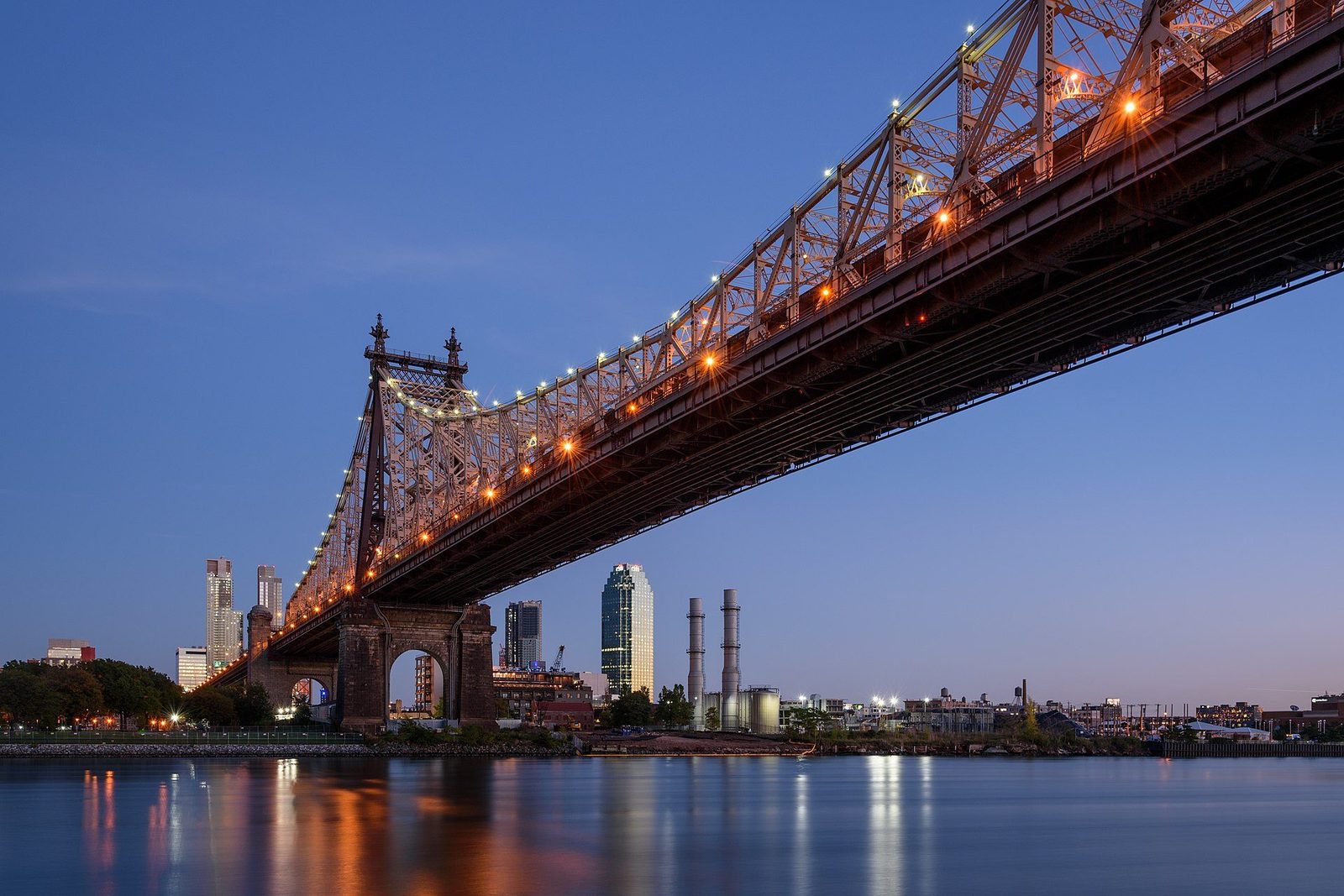
Gustav Lindenthal’s cantilever truss, with Henry Hornbostel as architect, opens to traffic on 30 March — 3,725 feet of bridge, 7,449 counting its approaches.
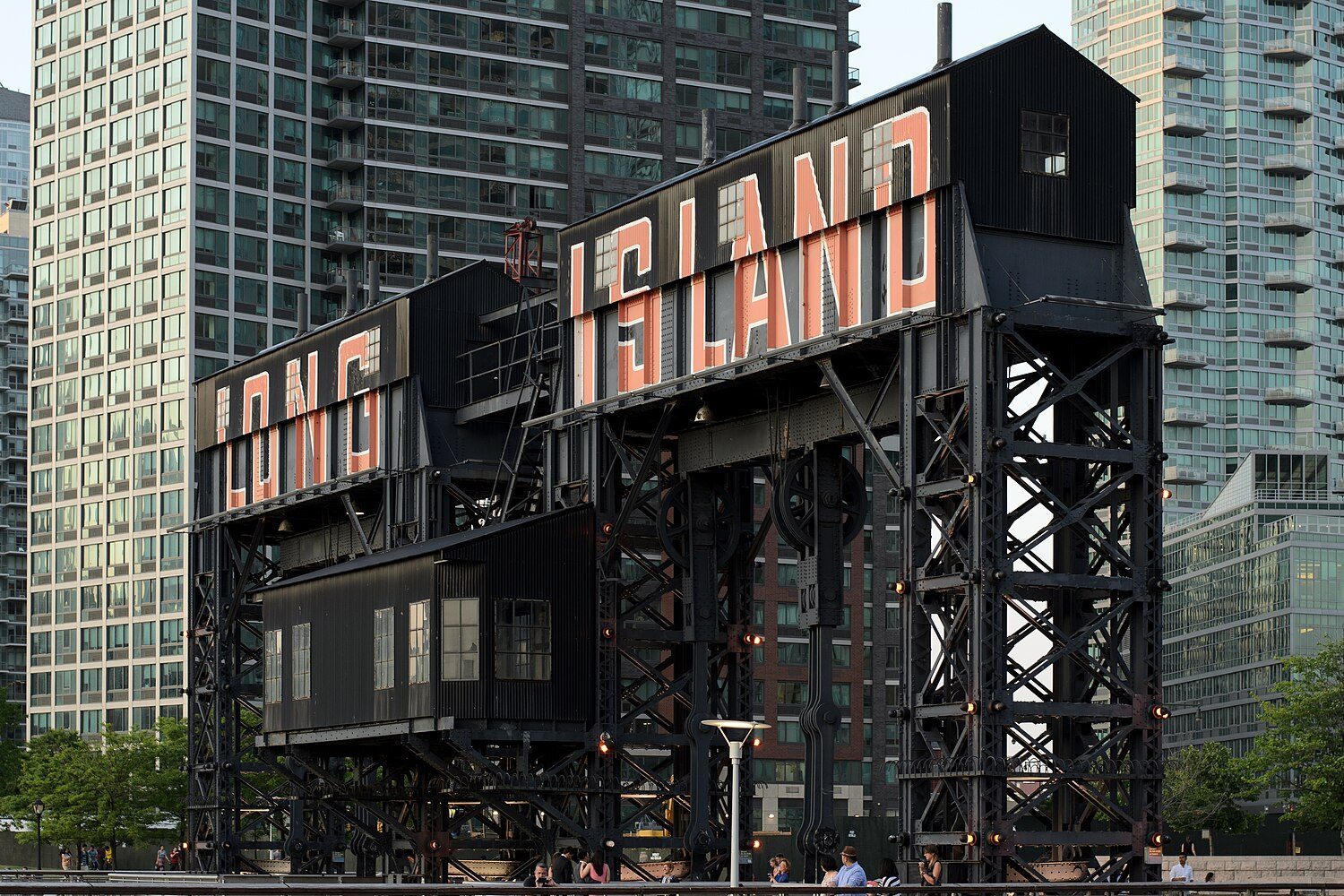
Freight gantries are built on the Hunters Point shore to move rail cars between the Long Island Rail Road and barges bound across the river.
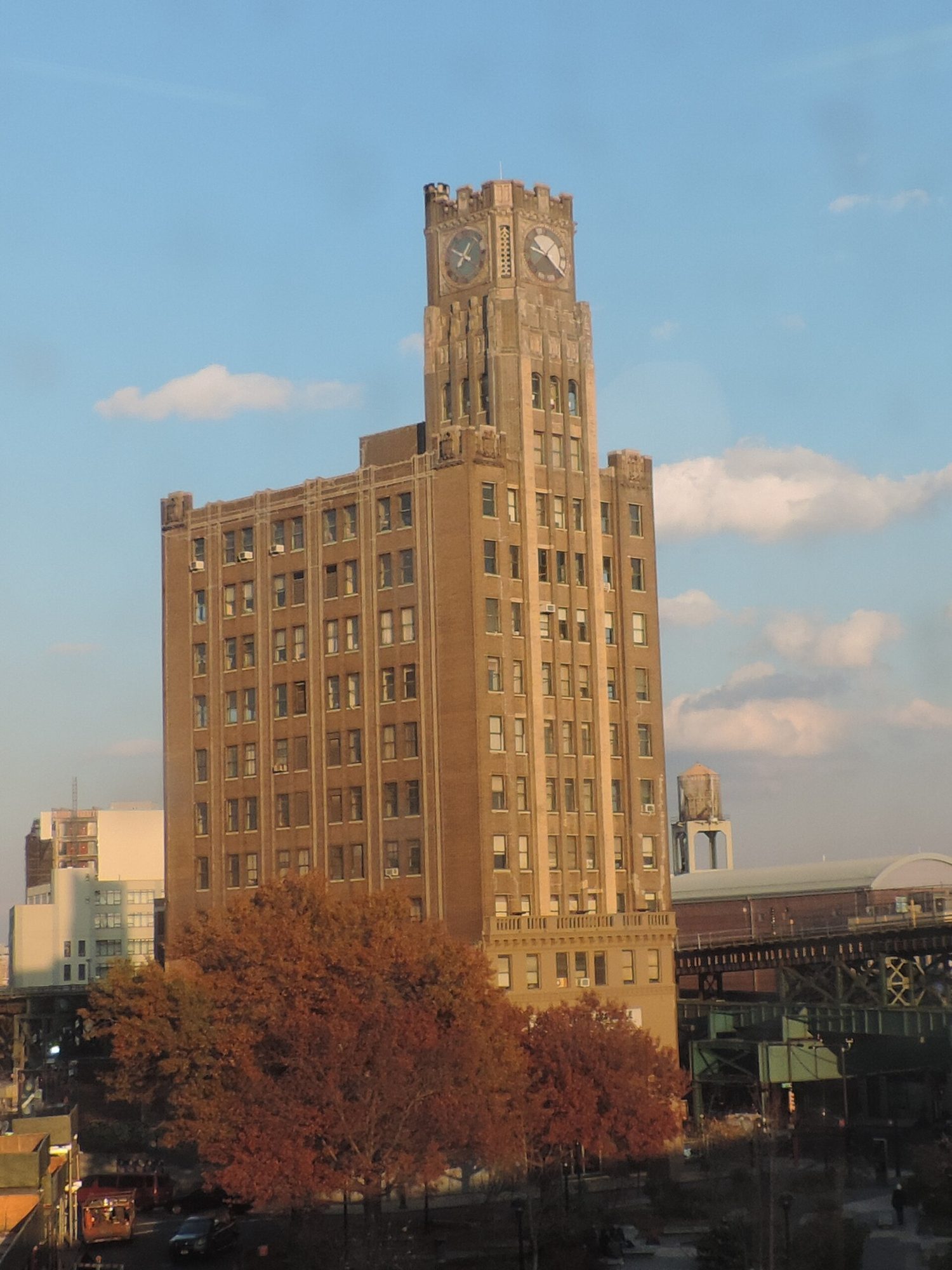
The Bank of the Manhattan Company finishes an eleven-storey neo-Gothic tower on Queens Plaza North, capped by a three-storey clock. Morrell Smith, architect. The press at its May dedication called it the first skyscraper in the borough.
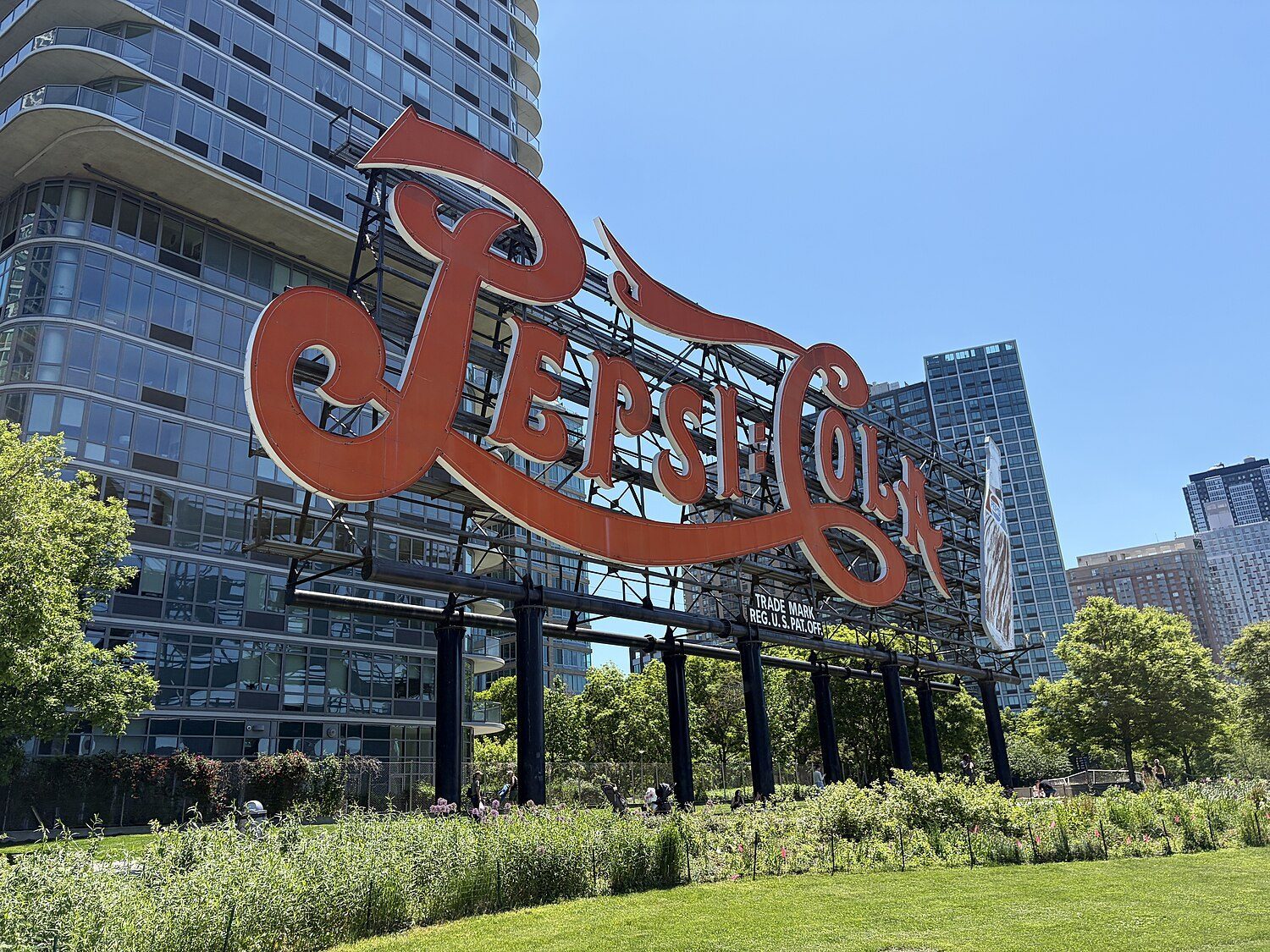
General Outdoor Advertising erects a neon sign roughly 150 feet long on the roof of the Pepsi-Cola bottling plant, its script following the company’s 1939 logo.
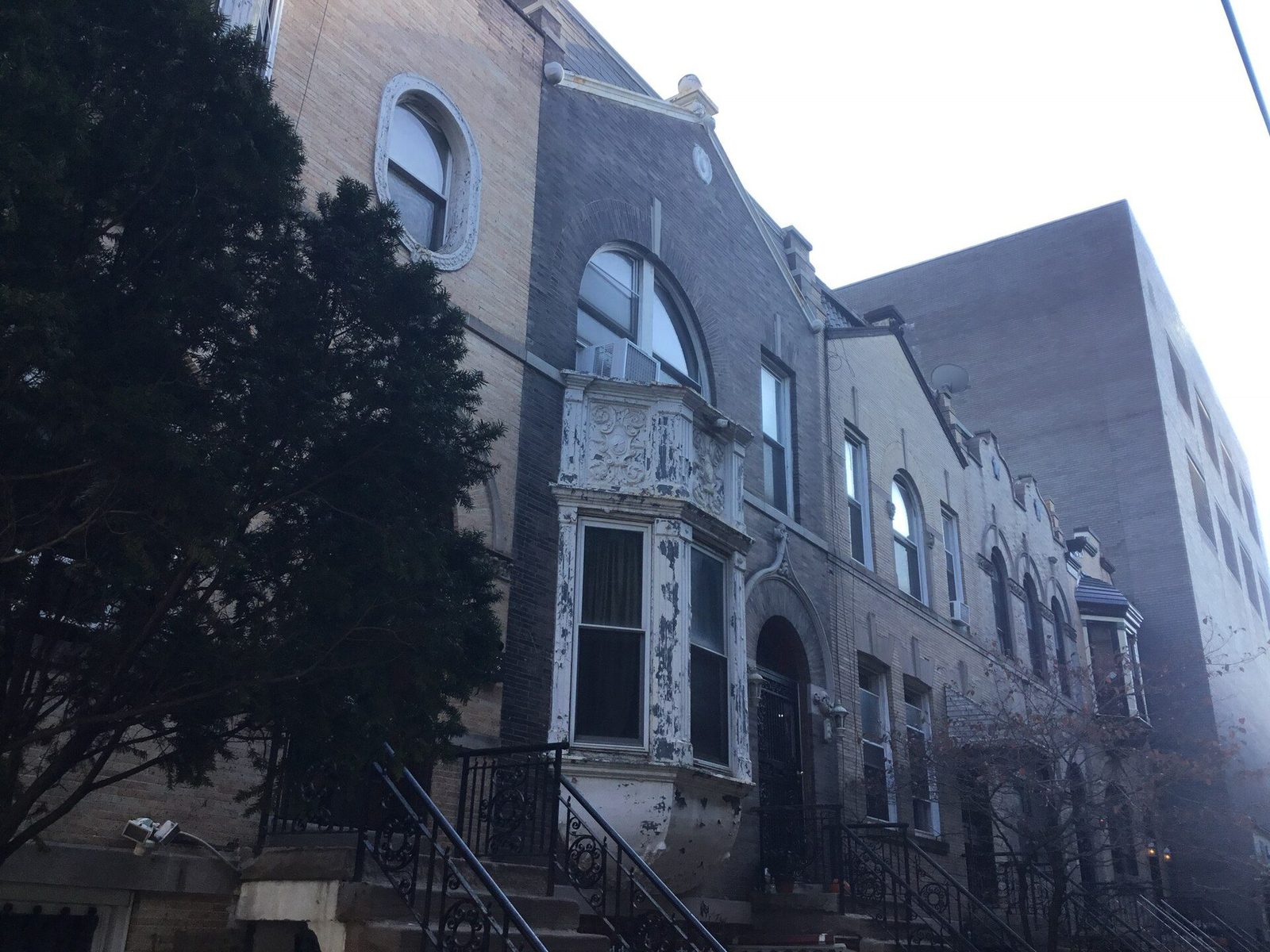
The Landmarks Preservation Commission designates Hunters Point on 15 May: 47 buildings on one block of 45th Avenue, built 1871–1890. No other Queens district follows for twenty-five years.
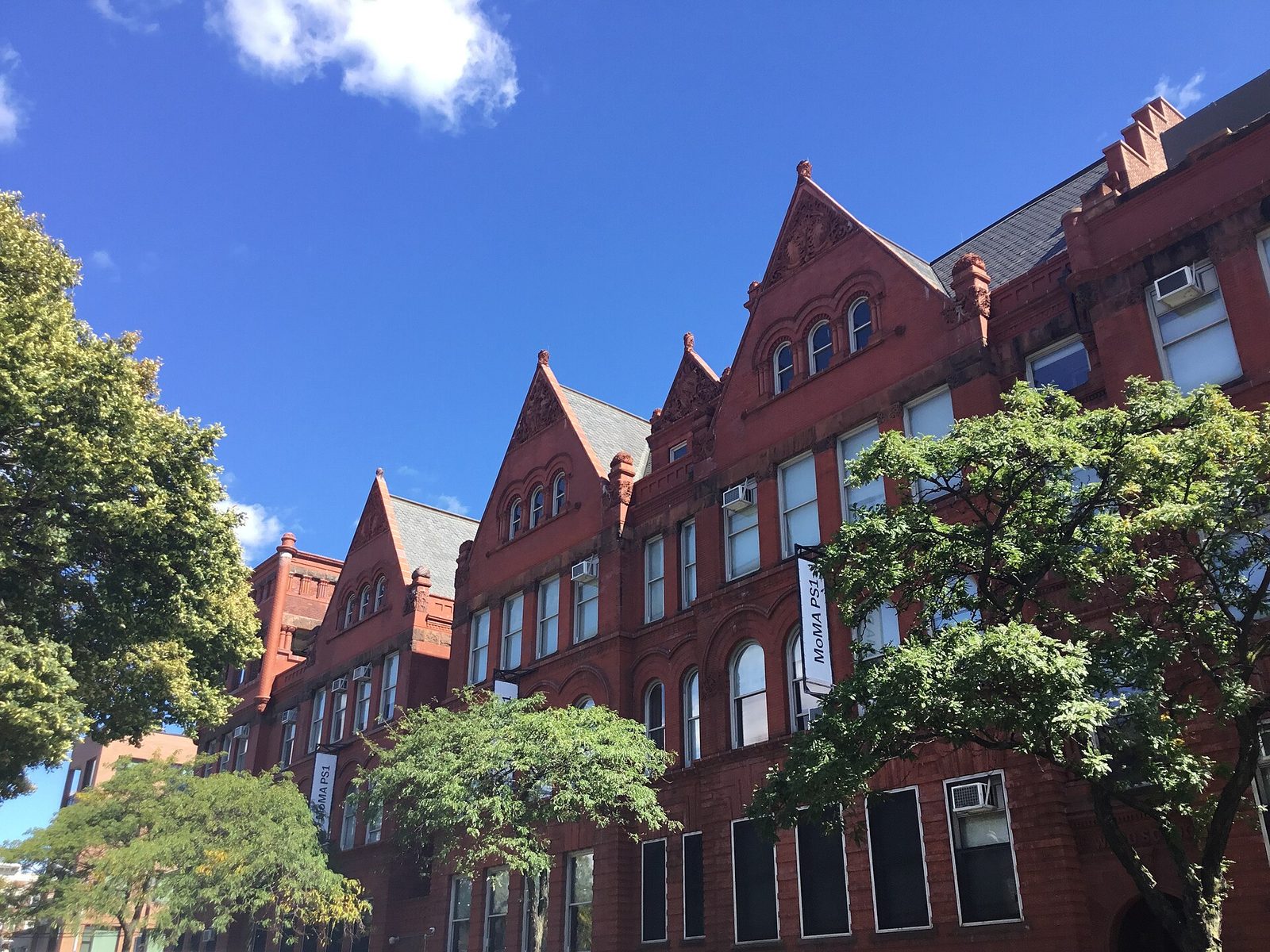
Alanna Heiss opens PS1 in the First Ward School of 1893, five years after founding the Institute for Art and Urban Resources to put artists into empty New York buildings. It affiliates with MoMA in 2000.
One Court Square tops out at 673 feet, after Citicorp weighed New Jersey, Westchester and Long Island and chose Queens on cost and a three-minute ride from Lexington Avenue. It is the tallest building in Queens for nearly thirty years.
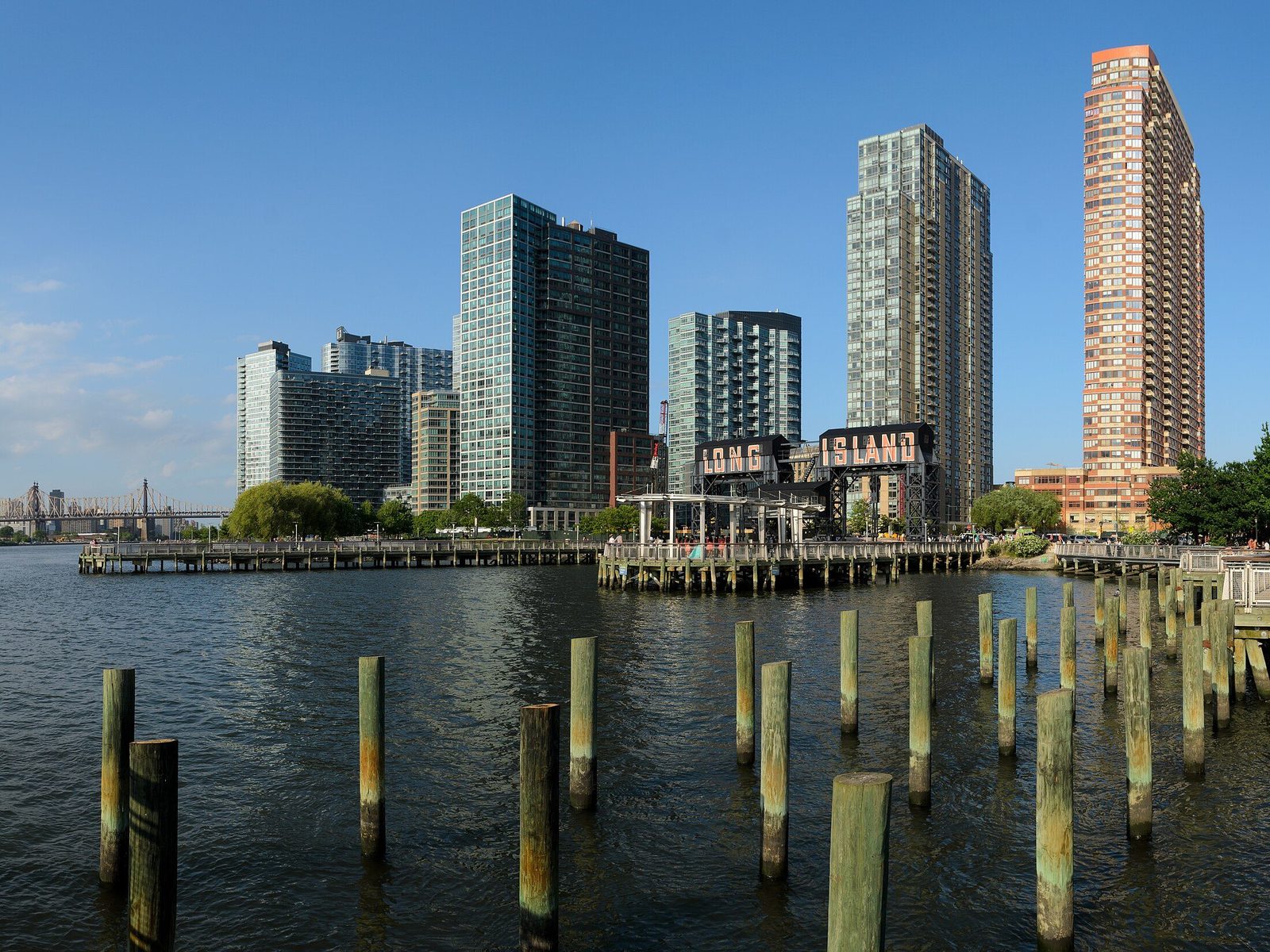
Gantry Plaza State Park opens around the restored gantries. A six-acre expansion in 2009 brings it to twelve acres, and Hunters Point South Park picks up where it ends.
Steven Holl’s 22,000-square-foot branch library opens on Center Boulevard in September. The same month, Skyline Tower passes One Court Square.
The City Council approves the OneLIC Neighborhood Plan on 12 November, rezoning 54 blocks — the Anable Basin waterfront among them — for roughly 14,700 homes.
12-acre NYS park whose original section was designed by Thomas Balsley + Lee Weintraub + Richard Sullivan, opened 1998; the six-acre 2009 expansion is by Abel Bainnson Butz. Anchored by the restored 1925 gantries — car-float transfer bridges that loaded freight rail cars onto barges between Queens and Manhattan. The fishing pier, the granite seating, the postcard view of the Empire State Building. An early and much-copied example of the city's industrial-waterfront-to-park conversions.
Roughly 150 feet long and 49 feet high, a cursive ruby-neon-on-aluminum sign built by General Outdoor Advertising in 1940 — its design echoing Pepsi's 1939 logo — and rebuilt by Artkraft Strauss in 1993. Originally atop the Pepsi-Cola bottling plant; lifted off the roof in 2004 ahead of demolition, parked 300 feet south, and returned to within feet of its historic spot in 2009. NYC Individual Landmark, designated April 12, 2016. In the Landmarks Commission's own words, one of the best-known features of the New York City waterfront.
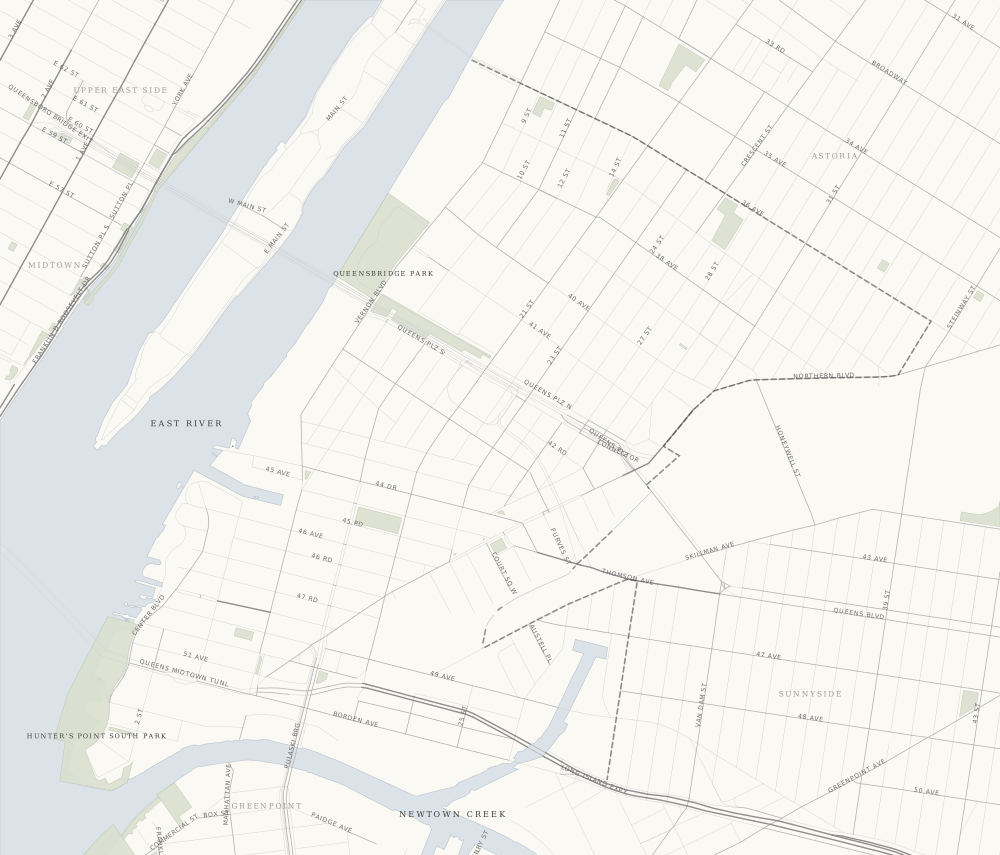
Every place in this guide, on one map. Filter by category, flip on Landmarks & history for the gantries, the sign and the 1908 courthouse, and look for the ★ — those are YCRE’s picks.
Long Island City is essentially two markets stacked. The waterfront new-build set — 4720 Center Boulevard, the Gotham Center / Hunters Point South towers, the Skyline / Court Square cluster — trades at a meaningful premium for the Manhattan view and five-minute commute. The Court Square office-to-residential stock and the older brick mid-rises around 21 St and Vernon Blvd anchor the floor. Rentals in Hunters Point clear at ask within seven to ten days for well-priced units; the 7-train's one-stop-to-Grand-Central frame keeps Court Square one of NYC's tightest commuter markets. Current PPSF figures sourced from The YCRE Edit, refreshed quarterly.
Raúl de Armas of Skidmore, Owings & Merrill designed this green-tinted glass tower for Citicorp in 1989. The tallest building in Queens for nearly 30 years, until Skyline Tower topped out in 2019. Citicorp weighed New Jersey, Westchester and Long Island before choosing Queens, on cost and on a three-minute subway ride from its Lexington Avenue headquarters.
67-story, 762-ft residential tower at 3 Court Square designed by Hill West Architects, completed 2021. 802 condominium residences from studio to four-bedroom. The tallest condominium in Queens, and the borough's second-tallest residential building since The Orchard opened in 2026. The reason Court Square's skyline rebuilt in five years.
Housed in an 1893 Romanesque Revival public-school building at 22-25 Jackson Avenue. Opened as PS1 in 1976 by Alanna Heiss, five years after she founded the Institute for Art and Urban Resources. Affiliated with MoMA since 2000. A defining force in the 1970s alternative-space movement, and a rare survivor of it still on its original site.
Steven Holl's 22,000-square-foot load-bearing concrete volume on the East River waterfront, opened September 2019. The building faces Gantry Plaza State Park; the angled windows frame the Manhattan skyline view from each interior reading level.
Eleven-storey neo-Gothic tower capped by a three-storey clock tower, built 1925–27 for the Bank of the Manhattan Company at 29-27 Queens Plaza North. Hailed at its May 1927 dedication as the first skyscraper in Queens. Four glass clock faces with Roman numerals crown the cresseted, gargoyle-trimmed top. NYC Individual Landmark, designated 2015.
Two rental towers, 48 and 42 stories (1,122 units total), at 22-44 Jackson Avenue, named for the global street-art warehouse that occupied the site from 1993 until its demolition in 2014. The lobbies and common spaces carry graffiti-inspired artwork and the complex includes artists' studios; ~90,000 sf of amenities. The original 5Pointz warehouse was at 45-46 Davis Street.
One block of 45th Avenue kept its 1870s houses while everything around it went to glass. Forty-seven of them, designated in 1968 — and the only historic district in Queens for the next twenty-five years.