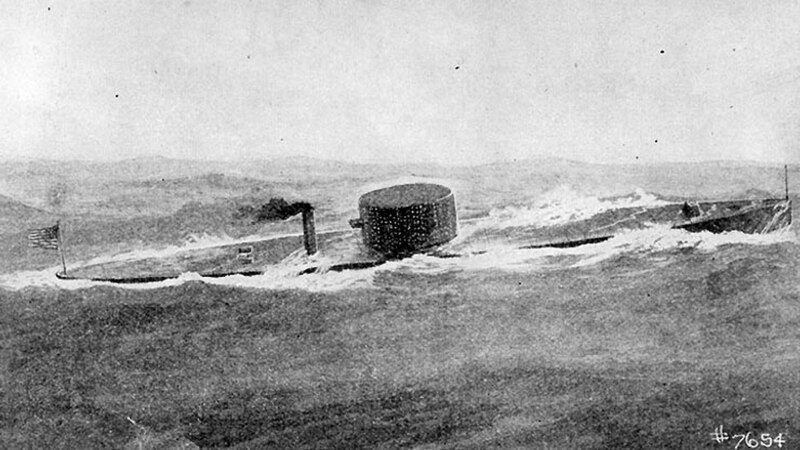
The USS Monitor launches
Built at the Continental Iron Works — 101 days from keel to water.
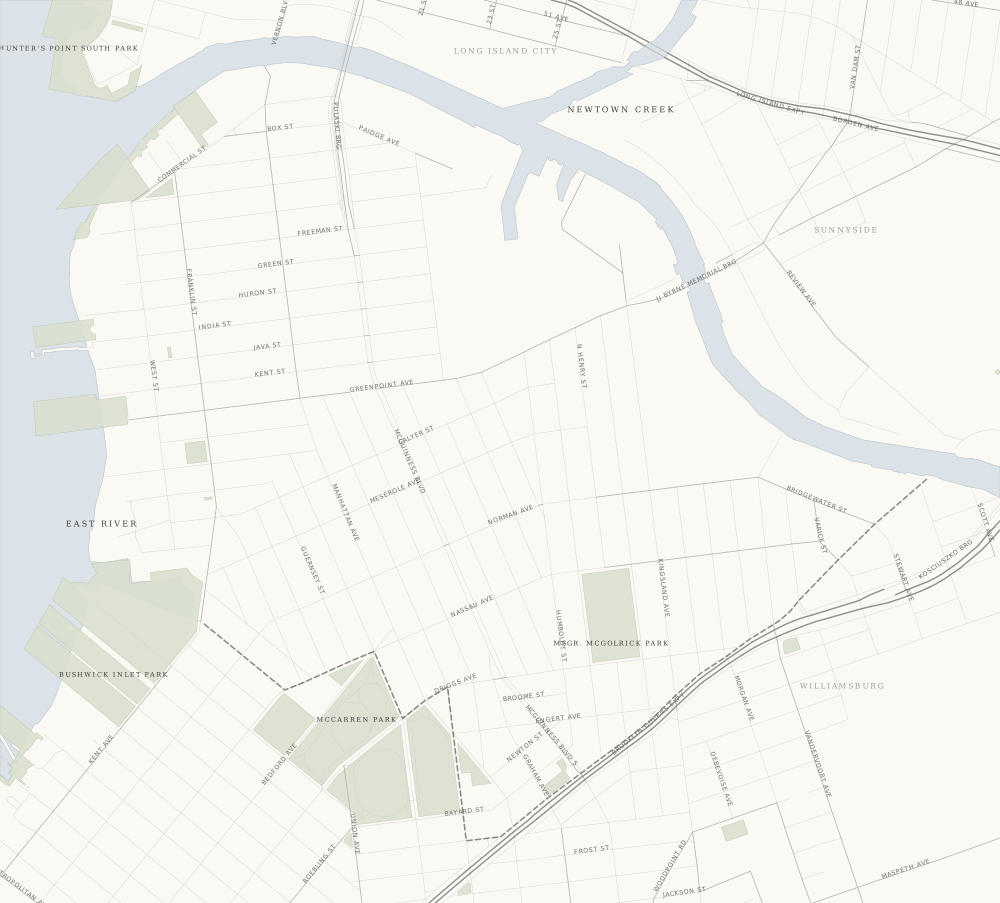
The shipbuilding peninsula at the end of the G — Polish Manhattan Avenue, a Japanese design block, and a slim new skyline on the water.
A shipbuilding peninsula that industrialized early, kept a Polish century on its main avenue, and absorbed a slim new skyline on the water. Scroll the timeline.
Built at the Continental Iron Works — 101 days from keel to water.
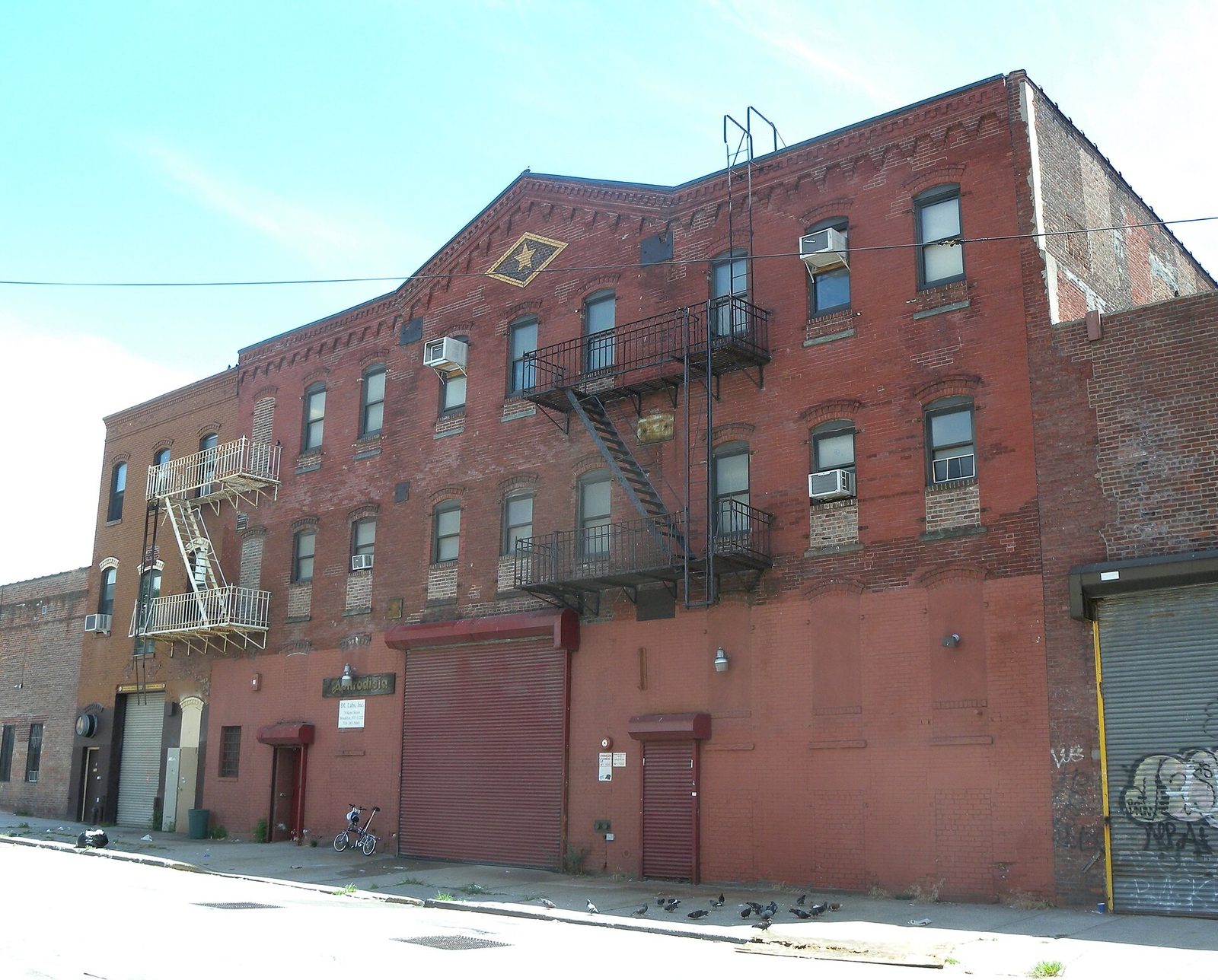
The pencil works runs until 1956; nine buildings survive as a Historic District.
More than fifty oil refineries work the edge, with glass, printing, pottery, and iron.
Lamb & Rich’s model housing for Charles Pratt’s oil workers — rented to this day.
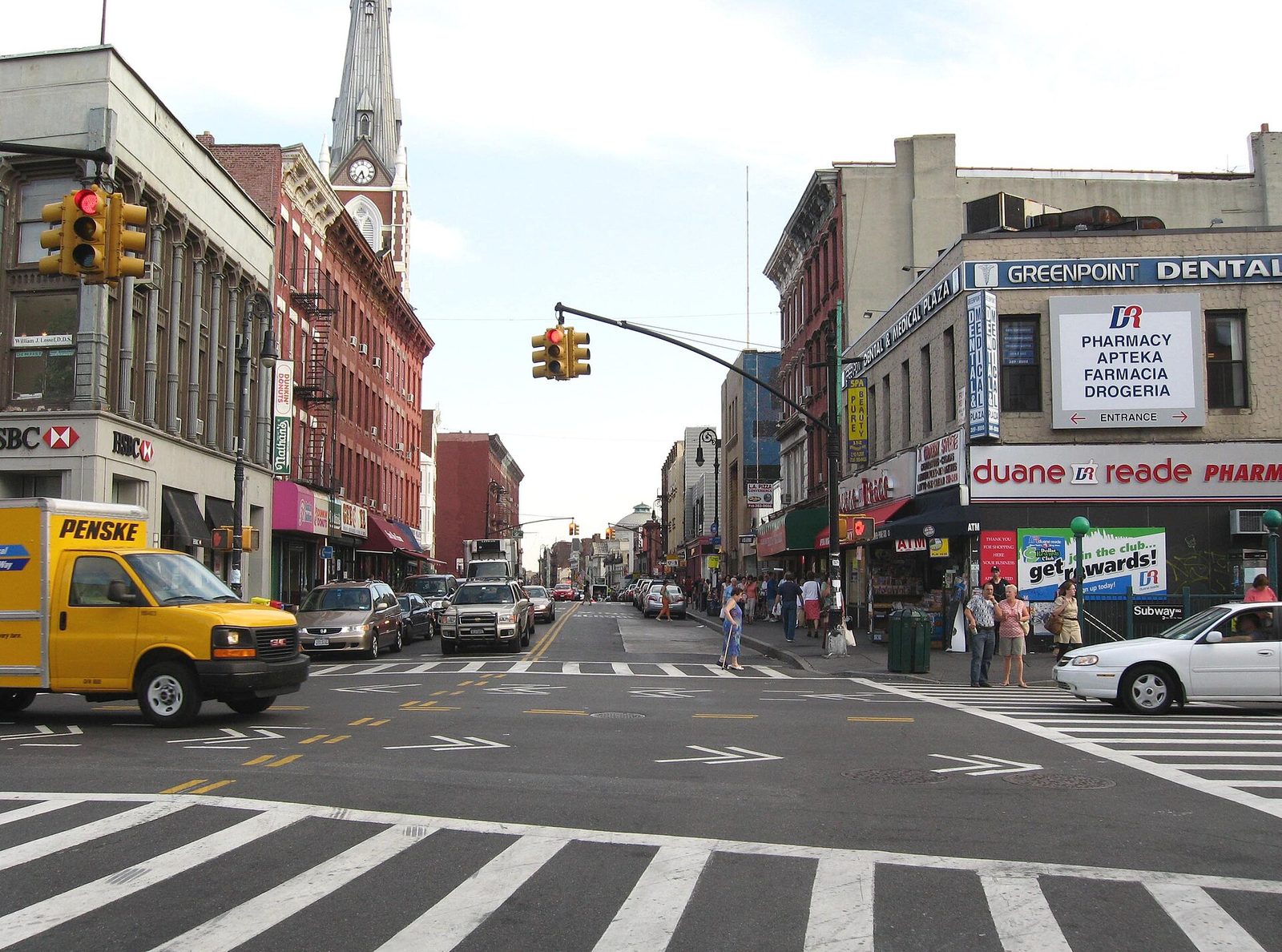
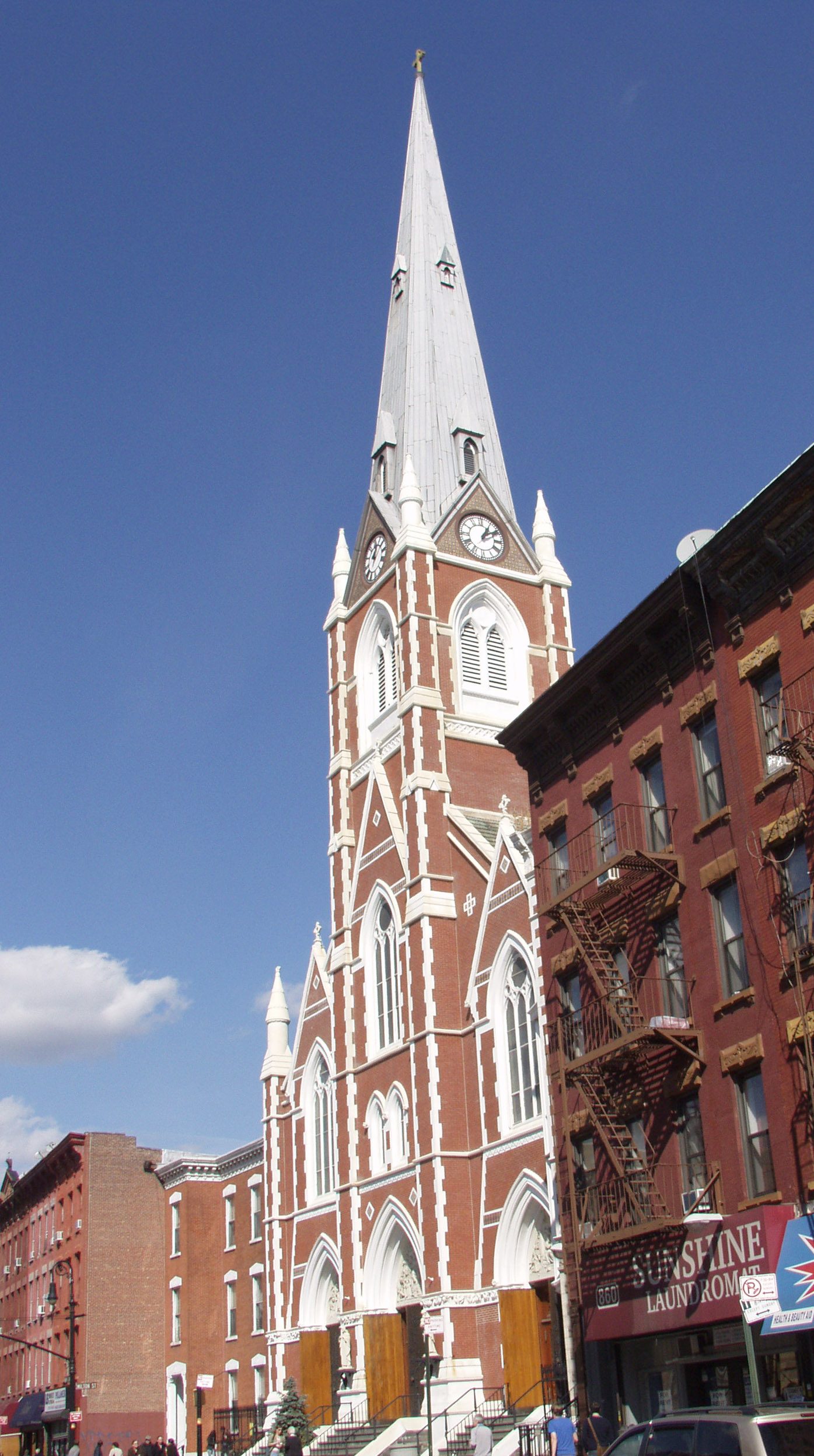
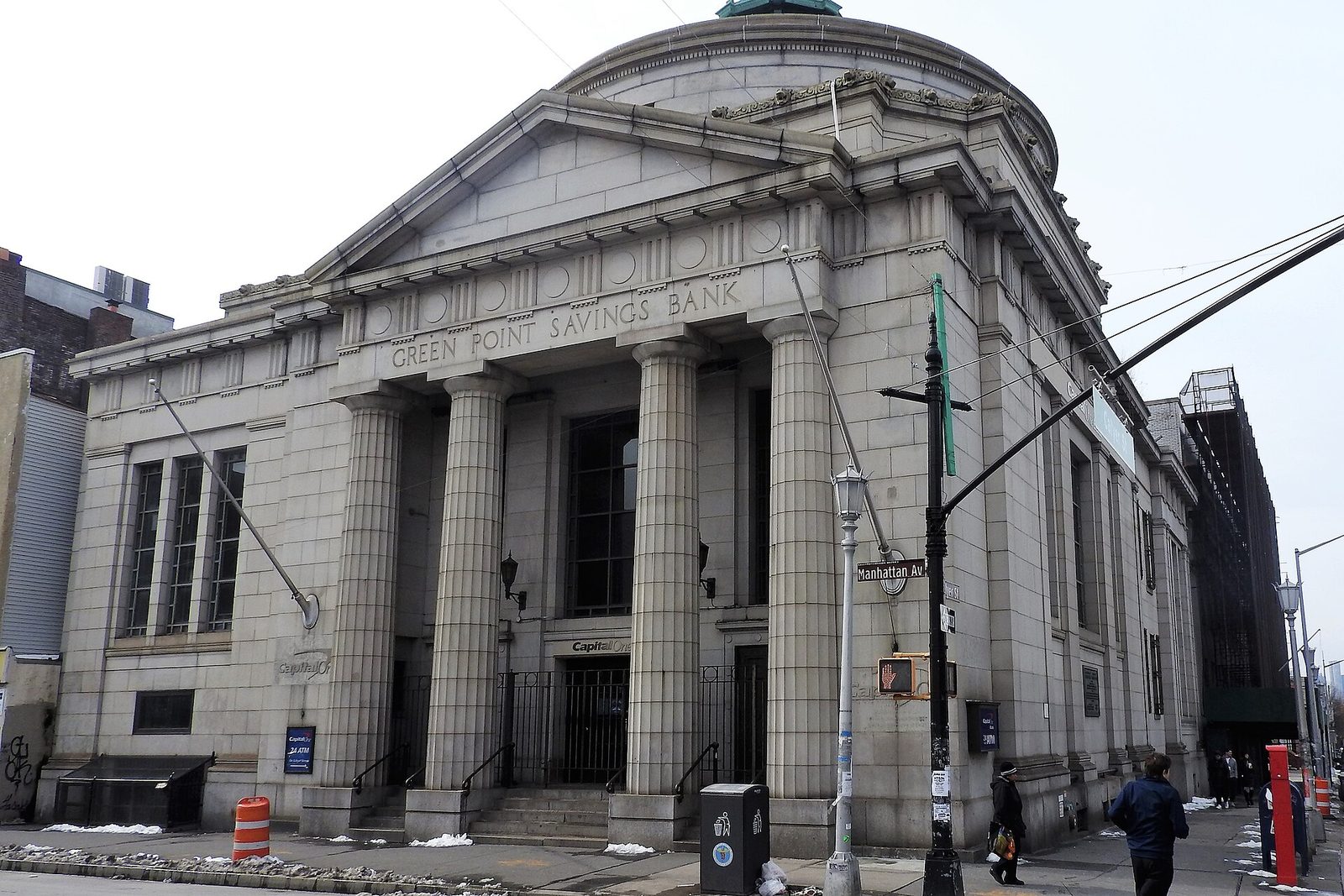
Roughly 41,000 Poles settle around Manhattan Avenue — walkable end to end in Polish.
The Greenpoint–Williamsburg rezoning opens eight blocks of shoreline to housing.
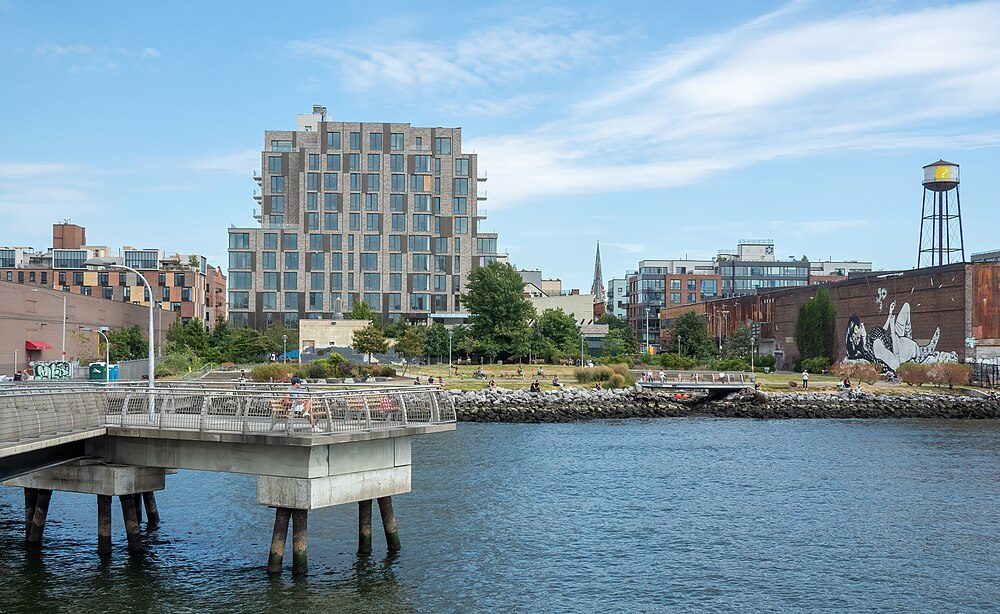
One Blue Slip, The Greenpoint, then OMA’s cantilevered Eagle + West rise on the water.
A face-block of Norman Avenue becomes the city’s densest Japanese-Scandinavian design strip.
1 Java Street opens as the city’s largest residential geothermal building; the next towers break ground.
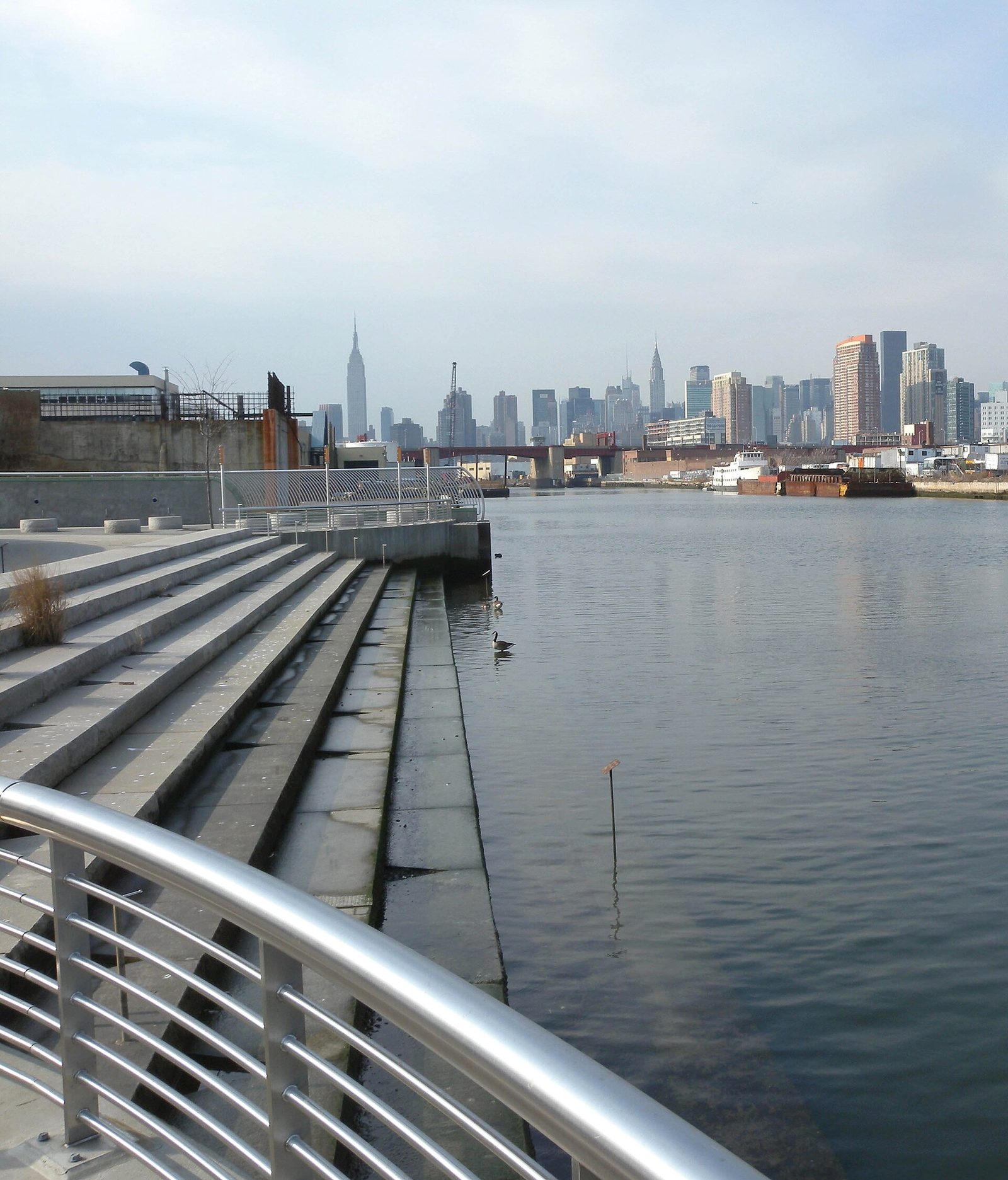
On the site of WNYC's 1937 Art Deco transmitter station and its two 304-foot AM towers, the neighborhood's front porch opened in 2012 — a lawn, gardens, and a fishing pier running straight down the Greenpoint Avenue axis, with the Midtown skyline as the back wall. Designed by EDAW, WXY, and McLaren; the ferry glides past the pier head all day.
The 2005 rezoning promised a continuous 27-acre waterfront park on the Greenpoint–Williamsburg line. Twenty years on it arrives in sections: 86 Kent, the 50 Kent lawn (2021), and — as of April 2026 — the Motiva inlet parcel, with Brooklyn's tiniest beach. The CitiStorage parcels are cleared and in remediation; officials put the finish line $75–100 million away. The neighborhood keeps showing up anyway.
Every place in this guide, on one map. Filter by category, flip on Landmarks & history to see the industrial inheritance, and look for the ★ — those are YCRE’s picks.
Greenpoint sits inside the North Brooklyn band reported by Corcoran, Elliman, and StreetEasy. In Q1 2026 the North Brooklyn median sale price rose 14.3% year-over-year to $1.4 million, with price per square foot up 7.9% to $1,600 — and Greenpoint-specific monthly snapshots have run hotter on small-sample months, with medians in the $1.8–2.2 million band. Zillow's home value index for the neighborhood read $1,563,733 in May 2026, up 7.1% on the year; its observed rent index for ZIP 11222 read $4,587, against a $4,347 Brooklyn median the same month. Supply splits cleanly — finite rowhouse and Historic District product inland, a deep new-development rental band on the water, with The Riverie's 834 units leasing into a Brooklyn rental market Corcoran clocked at +75% year-over-year activity. Current PPSF figures sourced from The YCRE Edit, refreshed quarterly.
OMA's twin cantilevered towers — 30 and 40 stories stepping toward and away from each other like a zipper — with interiors and landscape by Marmol Radziner. 745 rentals at the center of Greenpoint Landing, and the waterfront's architectural signature.
The 40-story tower over the India Street ferry pier — 95 condominiums stacked above 287 rentals, by Ismael Leyva Architects for Mack Real Estate Group with Palin Enterprises. The building that put a skyline address on the ferry commute.
Greenpoint Landing's first market-rate tower, by Handel Architects — 30 stories on the new Blue Slip street grid, leasing from 2018. The building that opened the master plan's waterfront phase.
Morris Adjmi's two 13-story condominium towers a block off the water — 171 residences, some forty percent with private outdoor space, developed by Quadrum Global with first closings in 2024. The neighborhood's condo benchmark north of India Street.
Lamb & Rich's Queen Anne model housing for Charles Pratt's Astral Oil workers, 1885–86 — a full block of Franklin Street with a settlement house, library, and kindergarten built in. National Register 1982, NYC Landmark 1983, and still a working rental building.
The 1872 Eberhard Faber building converted in 2009 by Daniel Goldner — the red brick kept, a checkerboard panel addition and rooftop light boxes added, 93 condominiums inside the pencil district's walls.
The geography does the editing. There is no through-traffic because the streets stop at the water, and the G never enters Manhattan — so the neighborhood self-selects for people who chose it on purpose. Peter Pan Donut has run its cash-only counter since the 1950s; the McGolrick Park farmers market sets up under Helmle & Huberty's pavilion year-round; the digester eggs glow blue over the creek at night. Even the boom keeps its voice down: the towers stand in one band on the water, and three blocks inland the loudest thing on a Tuesday is the church bell at St. Anthony's.
“Greenpoint quietly became one of the city’s most exciting restaurant neighborhoods — the lines on India Street are for bread.”
“Greenpoint Landing is the largest residential build-out on the North Brooklyn waterfront — and it is still only half delivered.”