The warehouse shelf
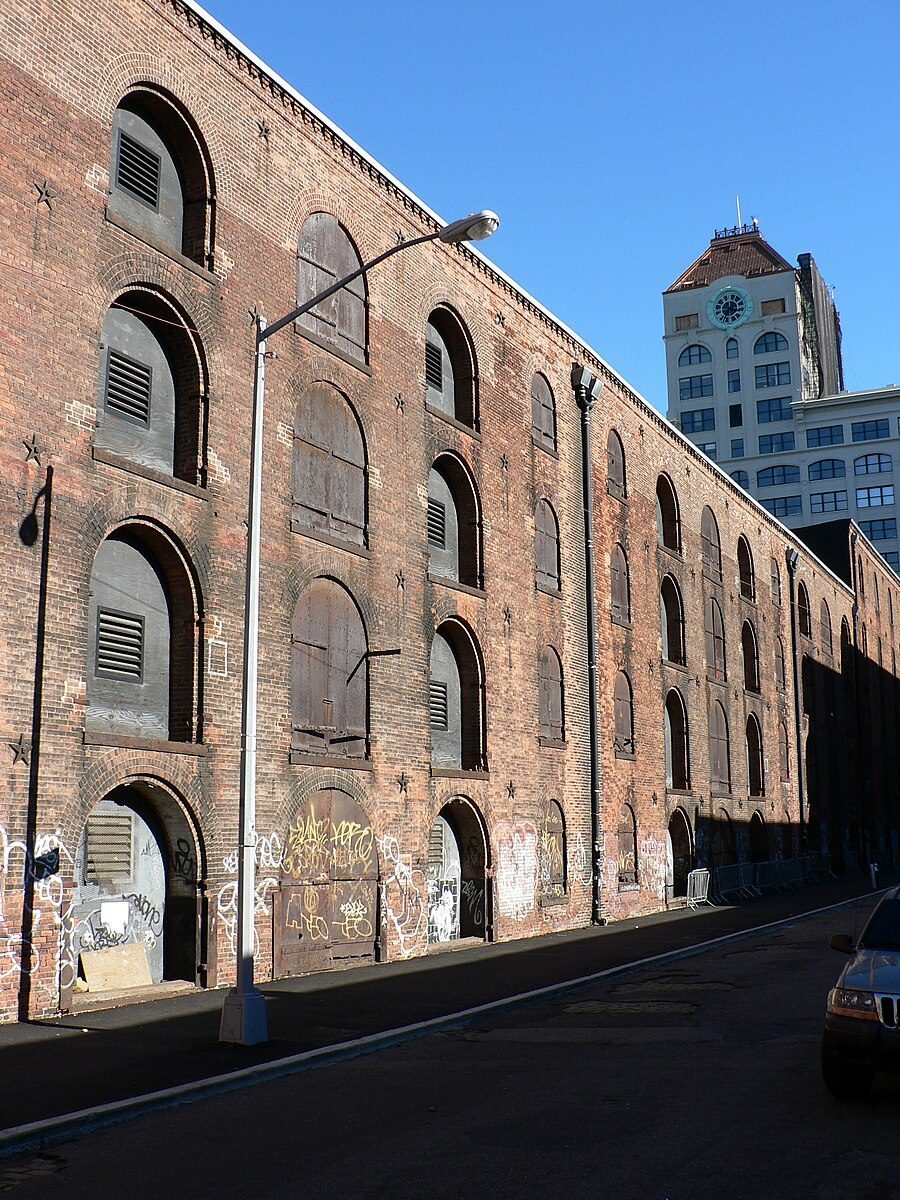
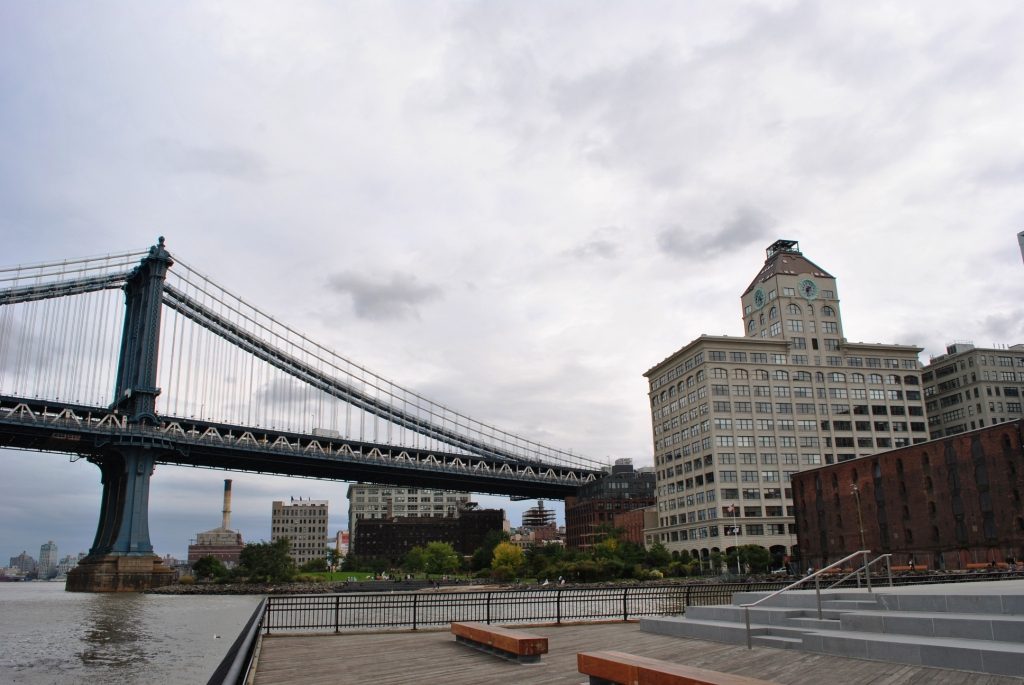
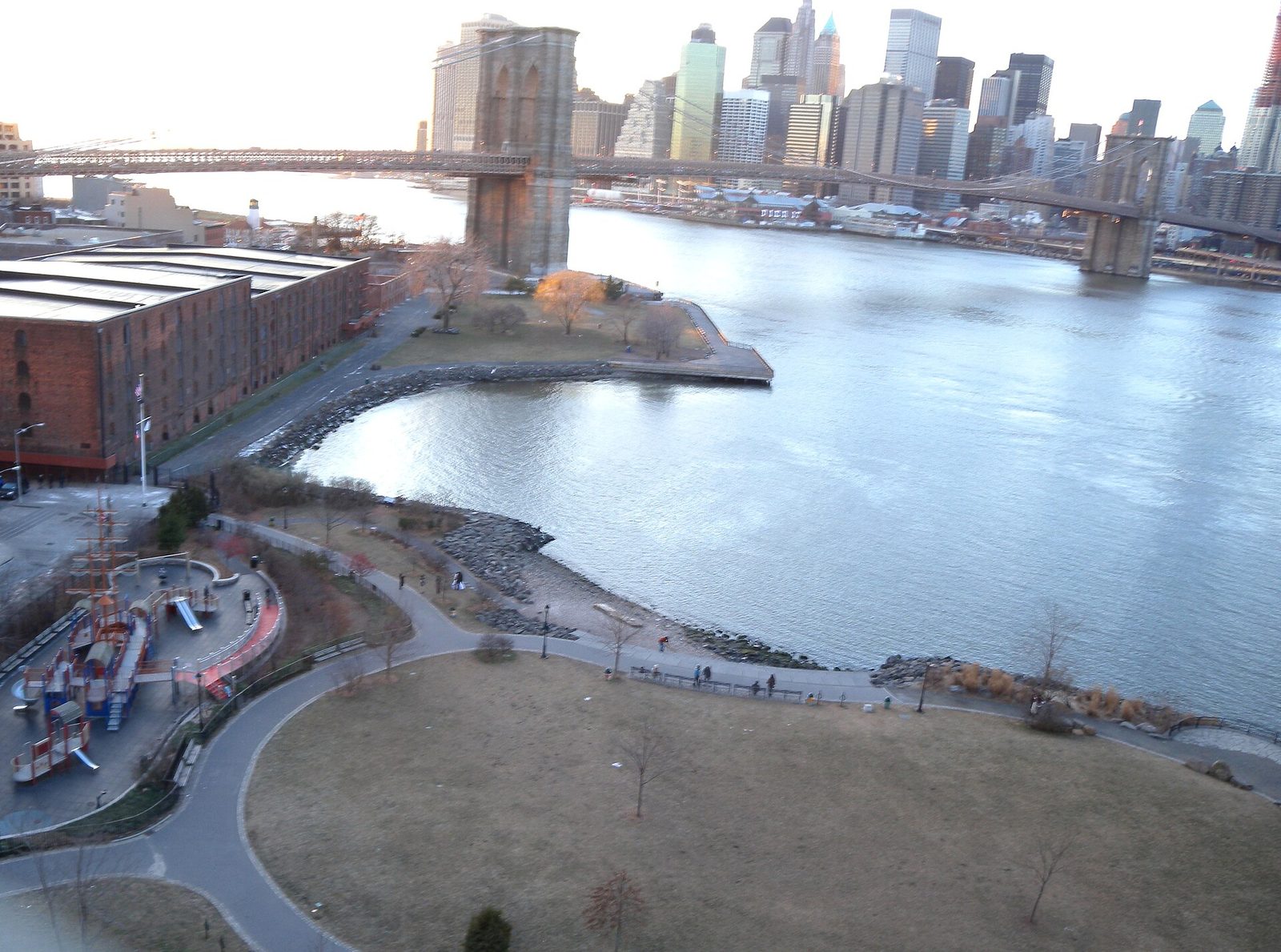
Brick warehouses rise between the bridges — most built 1880–1915 to serve the crossings and the Brooklyn waterfront.
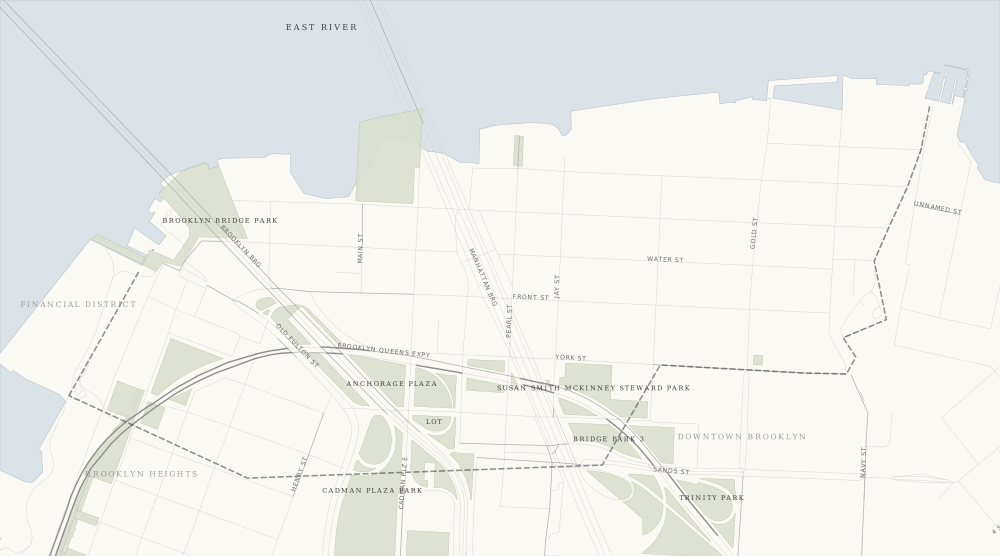
Twenty-five Belgian-block blocks bounded by water, two bridges, and a single developer's forty-year bet.
A small, sharply defined district between the bridges: built for manufacturing, bet on by one developer, and landmarked down to its cobblestones. Scroll the timeline.
Brick warehouses rise between the bridges — most built 1880–1915 to serve the crossings and the Brooklyn waterfront.
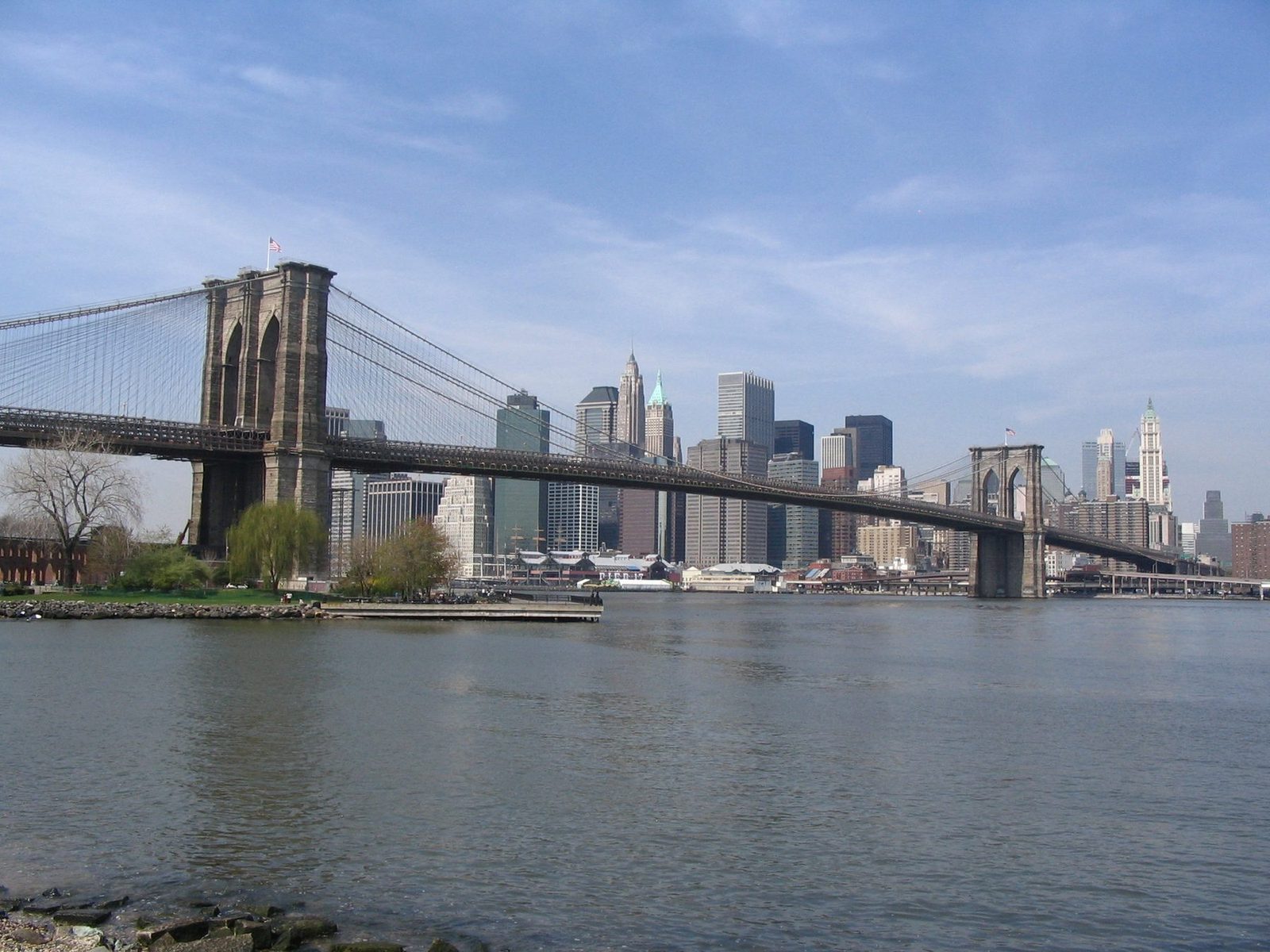
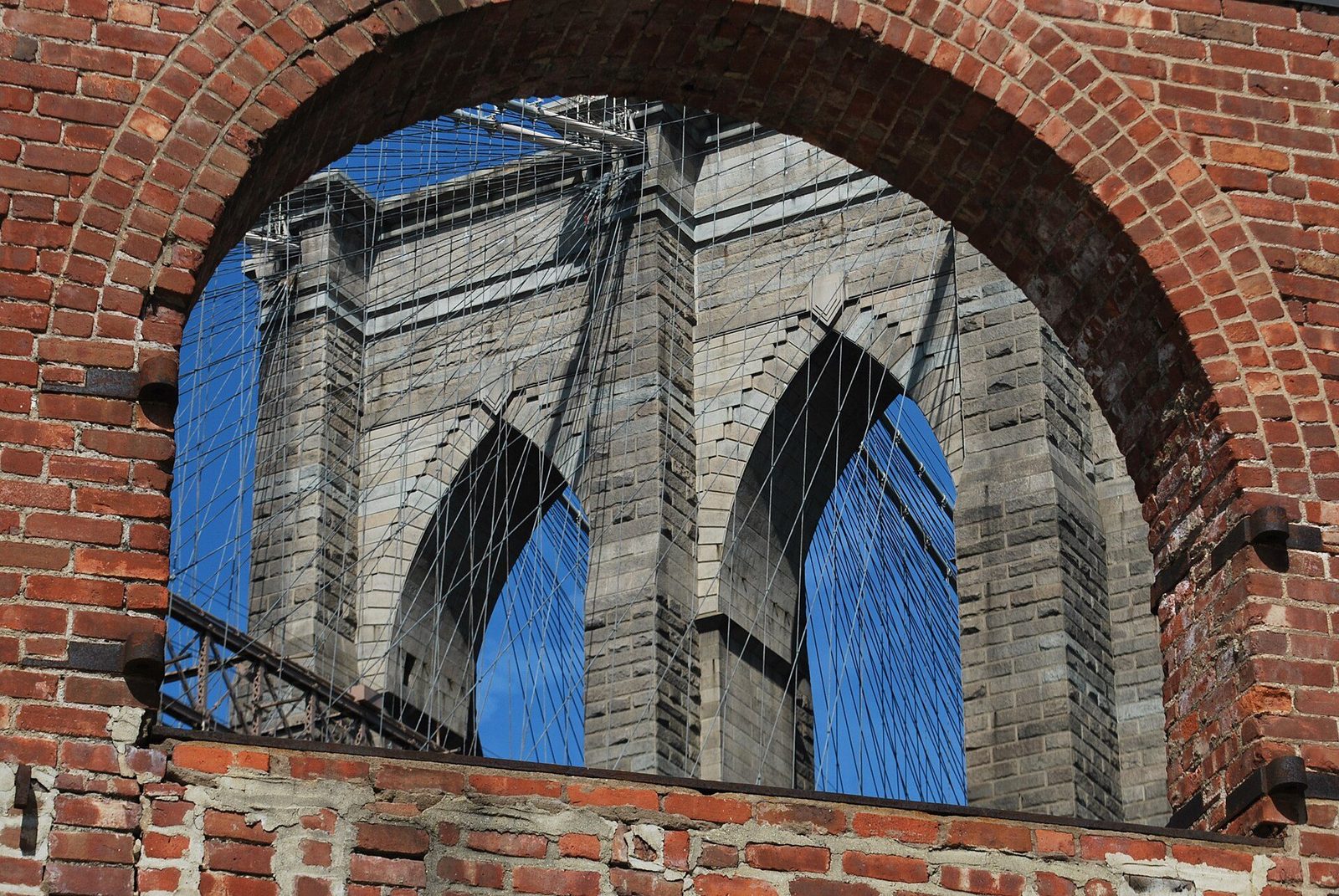
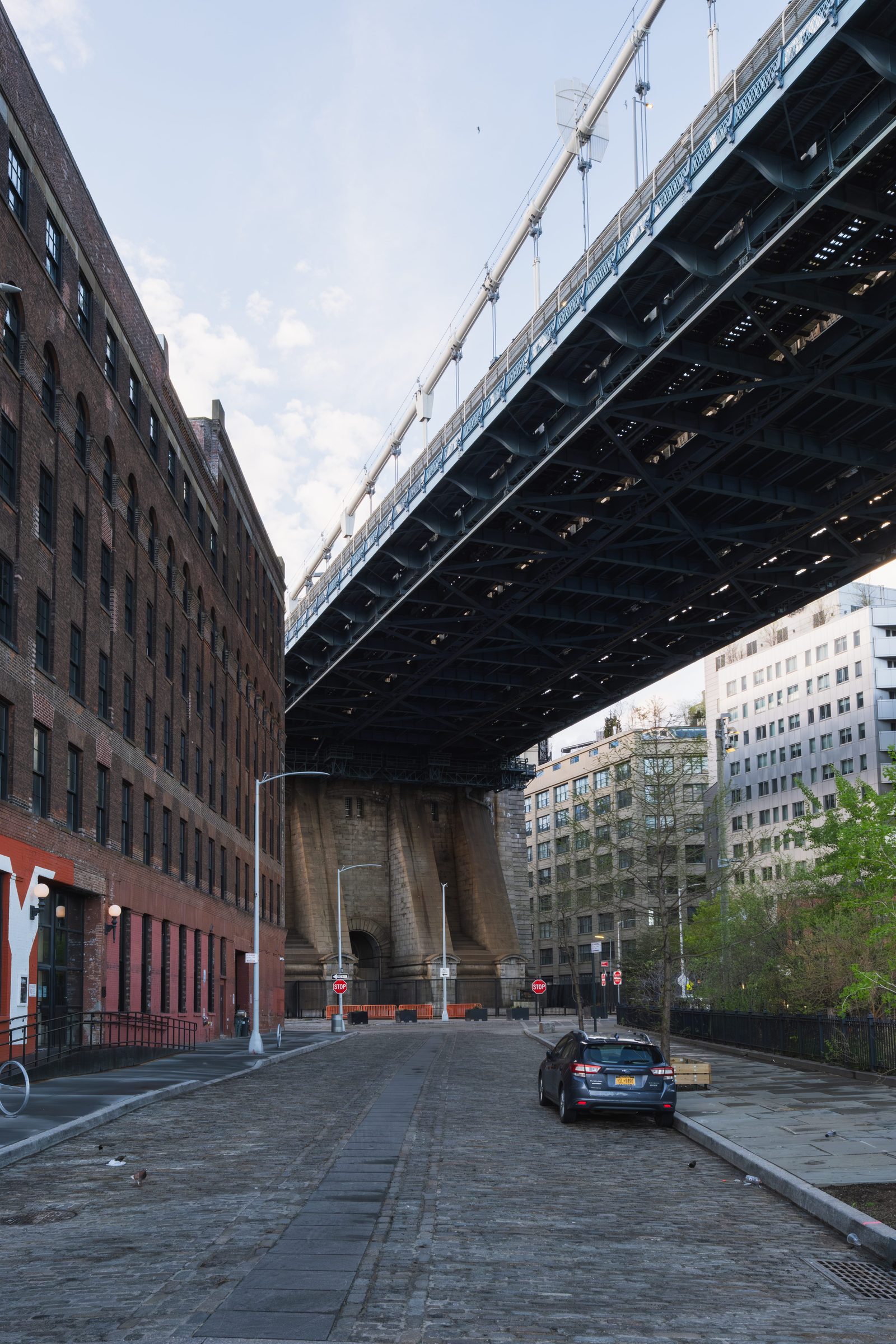
Roebling’s granite-and-steel span opens May 24, 1883; from DUMBO it is read from below — tower and cable anchorage.
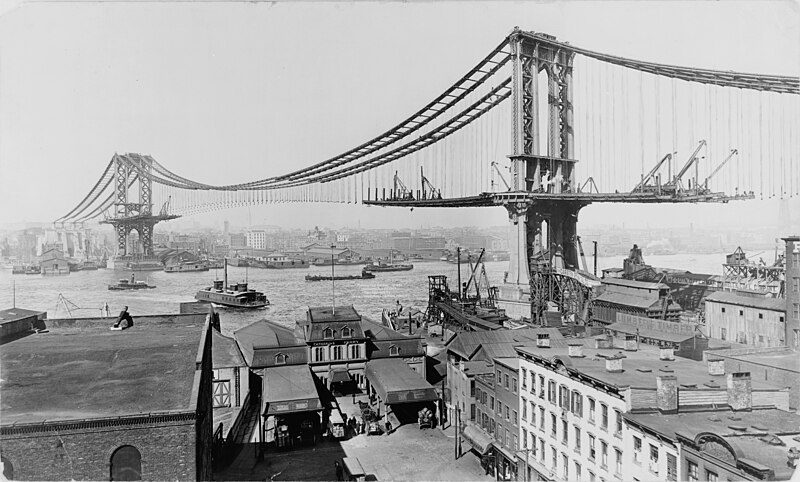
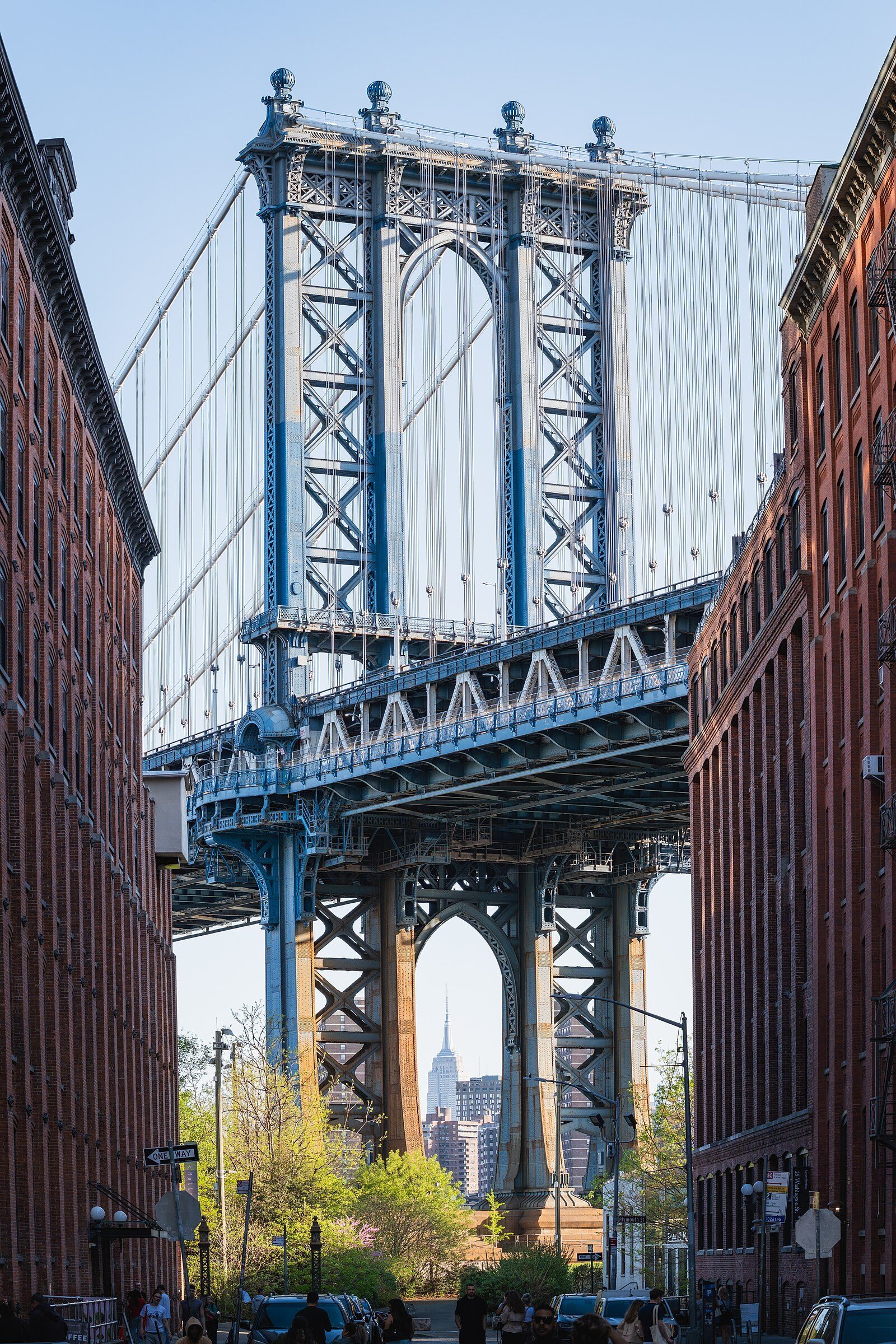
Moisseiff’s steel-truss span opens December 31, 1909, its colonnaded Manhattan-side portal following in 1912.
Artists in the warehouses coin D.U.M.B.O. — Down Under the Manhattan Bridge Overpass — hoping to keep developers away.
David Walentas’s Two Trees buys roughly two million square feet of industrial buildings for around $12 million.
Manufacturing-only zoning lifts; Two Trees converts the first residences, beginning with One Main Street — the Clock Tower.
December 18, 2007: the DUMBO Historic District — 91 buildings and the Belgian-block streets themselves — is designated.
Olympia DUMBO and Front & York add new residential towers as Brooklyn Bridge Park fills 85 acres of shoreline.
The eighty-five-acre park that wraps DUMBO's northern and western edges was the city's largest waterfront park development since Central Park in the 1860s. Built in phases on the decked-over former Piers 1 through 6, between 2008 and 2018, under landscape architect Michael Van Valkenburgh Associates. Each pier is programmed differently: Pier 1 (lawn, Squibb Park Bridge, Jane's Carousel), Pier 2 (basketball, pickleball, kayaking), Pier 3 (labyrinth lawn), Pier 5 (soccer), Pier 6 (volleyball, ferry to Governors Island).
Seven adjoining brick warehouses on Water Street, built 1869–1885 originally for coffee storage, sat empty for forty years before Midtown Equities and HK Organization reopened the complex in 2017. The 330,000-square-foot rehabilitation, designed by S9 Architecture, kept the original five-story brick masonry and added a glass-and-steel courtyard cut through the middle. Anchored now by West Elm's flagship, Time Out Market, Cecconi's, and Dumbo House. Recapitalized February 2019 in a $420 million deal — a useful proxy for what stabilized DUMBO retail is worth.
Every place in this guide, on one map. Filter by category, flip on Landmarks & history for the warehouse district’s bones, and look for the ★ — those are YCRE’s picks.
The residential market is anchored by three new-construction luxury condominiums and a longer tail of pre-2010 loft conversions. Olympia DUMBO at 30 Front (Fortis + Hill West, 33 stories, 76 units, 2022) prices from $1.65M for one-bedrooms with an average of approximately $2,432 per square foot. Its record sale — Penthouse B, roughly 4,928 square feet across the entire 32nd floor — closed in February 2026 at $16.25 million ($3,297 per square foot), a record price per square foot for a Brooklyn sponsor condo and the third-priciest condo sale in Brooklyn history. It is not the borough record, which remains Quay Tower's $20.301 million (2020).
Front & York at 85 Jay Street (CIM + LIVWRK, Morris Adjmi, two 21-story towers, 408 units, full block) launched sales in 2020 and is priced from approximately $950,000. The amenity package — Life Time fitness, a private interior park, a rooftop pool, the Kids' Academy — is the most extensive in the neighborhood. The older conversion stock — the Clock Tower at 1 Main, One Brooklyn Bridge Park at 360 Furman, 168 Plymouth — trades more variably.
Neighborhood-wide medians: DUMBO median home sale price $2.3M in March 2026 (+6% YoY). Median condo sale $2.495M (August 2025). Brokers cite DUMBO as the highest-priced Brooklyn neighborhood by median PPSF in 2025–2026, narrowly above Brooklyn Heights and Cobble Hill. For current quarterly figures, see The YCRE Edit.
On the Belgian-block streets the neighborhood keeps its scale — a warehouse cornice, the underside of a bridge, the river past the last row of cobbles.
"A curve where the neighborhood asked for a wall."
"DUMBO's twenty-something blocks now hold more square footage of new luxury condo than the rest of the Brooklyn waterfront combined."
The defense, where it exists, is the parks. DUMBO became, in the 2010s, the rare American example of a former industrial waterfront that was successfully reclaimed as continuous public space while still allowing residential density. Whether the apartments looking down at it have ruined the view or paid for it is, depending on who you ask, the wrong question or the only one.